
Política
Dinorah Figuera comprometió públicamente trabajar por las liberaciones «en los próximos días»
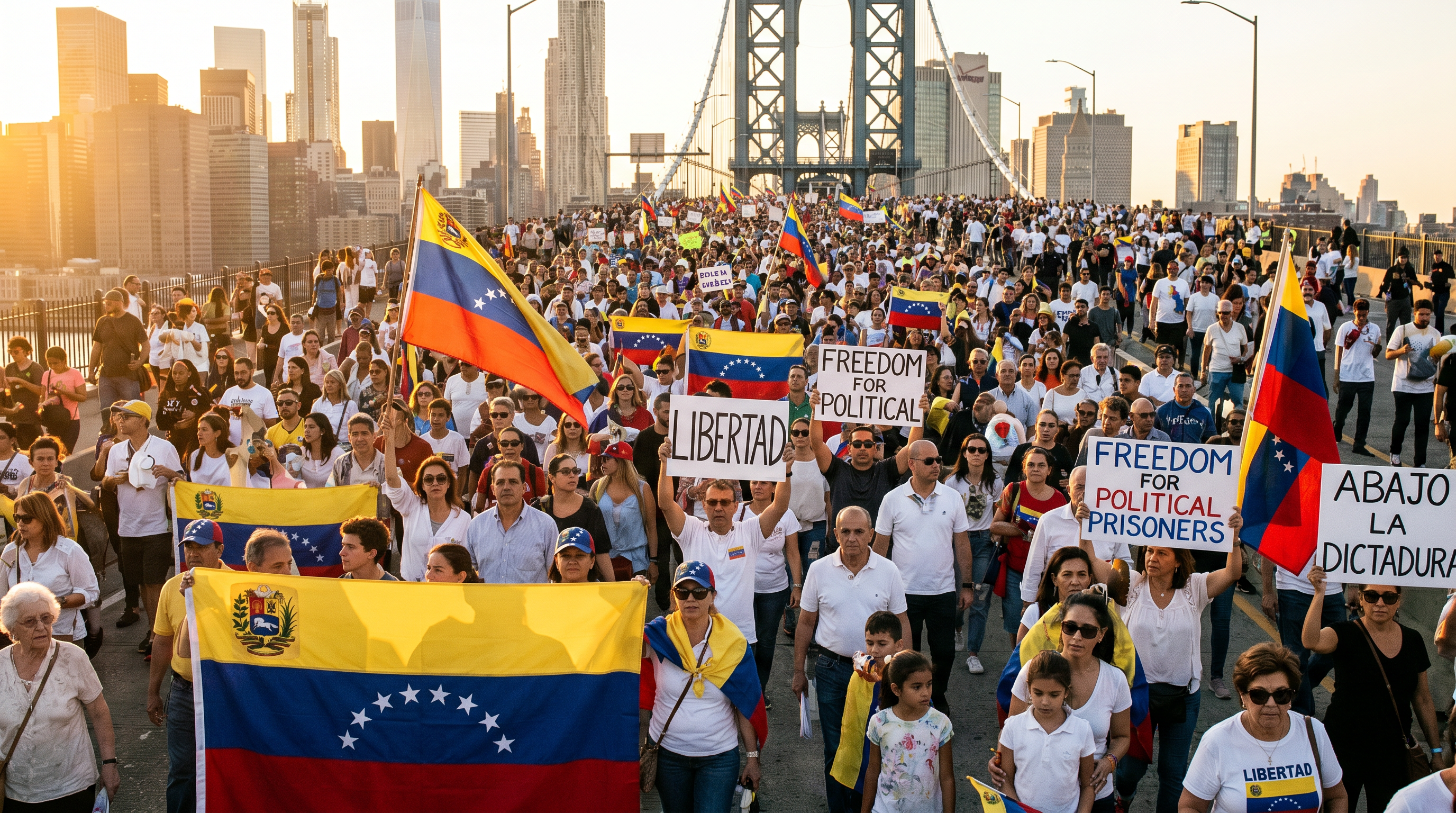
La presidenta de la AN 2015 y jefa negociadora del proceso, Dinorah Figuera, asumió públicamente el compromiso de trabajar para que se produzcan liberaciones de presos y perseguidos políticos en los próximos días, tras reunirse con familiares. Es la primera respuesta institucional a la crítica más consistente al comunicado del 12 de agosto.

POLÍTICA · 13 DE AGOSTO DE 2026
La presidenta de la Asamblea Nacional electa en 2015 y jefa negociadora del proceso, Dinorah Figuera, publicó este 13 de agosto de 2026 desde su cuenta oficial verificada de X un compromiso público específico: trabajar para que en los próximos días se produzcan liberaciones de presos y perseguidos políticos, tras reunirse con familiares. Es la primera respuesta institucional a la ausencia notoria de los presos políticos en el comunicado firmado el 12 de agosto que cerró el primer ciclo del diálogo.
| QUÉ | Compromiso público de trabajar para que se produzcan liberaciones de presos y perseguidos políticos en los próximos días. |
| QUIÉN | Dinorah Figuera, médico de profesión, presidenta de la Asamblea Nacional electa en 2015 y jefa negociadora del bloque opositor en el primer ciclo del diálogo. |
| CUÁNDO | Publicación del 13 de agosto de 2026, un día después de la firma del comunicado conjunto del primer ciclo. |
| DÓNDE | Cuenta oficial verificada de X @Dinorahfiguera, con más de 101 mil seguidores. |
| POR QUÉ | Responder institucionalmente a la reunión sostenida con familiares de presos y perseguidos políticos, y a la crítica más consistente al comunicado del 12 de agosto por no mencionar el tema. |
| CÓMO | Mediante publicación pública desde su cuenta institucional que compromete trabajo para que las liberaciones se produzcan en los próximos días. |
—
El comunicado firmado el 12 de agosto de 2026 por Jorge Rodríguez y Dinorah Figuera cerró el primer ciclo de conversaciones entre Gobierno Nacional y Asamblea Nacional electa en 2015. Establecía compromisos concretos sobre el sistema de justicia y sobre los activos venezolanos en el Banco de Inglaterra. No mencionaba a los presos políticos. Ninguna vez.
Esa ausencia fue la crítica más consistente al acuerdo por parte de amplios sectores de la sociedad civil venezolana. La documentamos con detalle en la cobertura editorial del día siguiente y en el especial Ángulos: Primer Ciclo, donde voces con perfiles y posiciones muy distintos coincidieron en señalarla como el punto más débil del texto firmado: Foro Penal contabilizó 382 presos políticos al 3 de agosto de 2026, el Comité por la Libertad de los Presos Políticos (Clippve) sostuvo su mesa de familias exigiendo medidas, María Corina Machado había establecido su liberación como primera de las cuatro condiciones para respaldar cualquier acuerdo derivado del proceso, y José Amalio Graterol, desde la línea Machado, formuló la posición más categórica: sin liberación de presos políticos, cualquier otro cambio es maquillaje institucional.
Este 13 de agosto de 2026, un día después del cierre del primer ciclo, Dinorah Figuera respondió públicamente a esa ausencia. Su respuesta merece ser leída completa por lo que compromete, por el marco desde el que lo compromete, y por lo que hoy no compromete todavía.
El texto de la declaración
Figuera publicó, desde su cuenta oficial verificada @Dinorahfiguera, la siguiente declaración:
En reunión sostenida con familiares de presos y perseguidos políticos asumimos el compromiso y es nuestro propósito trabajar para que en los próximos días se vayan dando las liberaciones. Recibimos este respaldo con plena conciencia del significado que tiene para el restablecimiento de la democracia enarbolar la bandera de libertad y desarrollar una agenda para lograr garantías políticas y derechos civiles plenos.
Los seis elementos concretos del compromiso
La declaración es breve pero contiene seis elementos concretos que merecen ser leídos por separado, porque cada uno tiene consecuencias operativas distintas.
Uno · El marco: reunión con familiares. Figuera establece explícitamente que el compromiso se asume tras una reunión sostenida con familiares de presos y perseguidos políticos. No es declaración unilateral desde el despacho institucional: es compromiso adquirido en presencia de las personas cuyos seres queridos están afectados. Esa distinción tiene peso simbólico y también operativo, porque implica interlocución sostenida con las familias durante el proceso de ejecución de lo comprometido.
Dos · Los dos universos afectados nombrados. La declaración menciona a «presos y perseguidos políticos». La distinción es importante. Los presos políticos son las personas privadas de libertad por motivos políticos actualmente contabilizadas por Foro Penal en 382 casos según el balance del 3 de agosto. Los perseguidos políticos son un universo más amplio: incluye a quienes tienen procesos judiciales abiertos sin estar privados de libertad, a quienes están sujetos a medidas cautelares que restringen su libertad de tránsito o expresión, a quienes tienen prohibición de salida del país, a quienes están en el exilio por razones de persecución, y a familiares o allegados que enfrentan restricciones por su vinculación con perseguidos. Nombrar ambos universos amplía sustancialmente el alcance del compromiso más allá de las liberaciones de detenidos.
Tres · El verbo del compromiso: trabajar. Figuera no dice «liberaremos» ni «conseguiremos que liberen». Dice «trabajar para que se vayan dando las liberaciones». La formulación reconoce que las liberaciones dependen de decisiones que la AN 2015 no toma unilateralmente. La AN 2015 no controla las cárceles, no dirige la fiscalía, no maneja el Ministerio del Interior. Puede negociar, exigir, presionar, condicionar, pero no puede liberar por decreto. El verbo «trabajar» es honesto respecto a la naturaleza del compromiso: es compromiso de esfuerzo, no de resultado garantizado.
Cuatro · El plazo declarado: los próximos días. La formulación «en los próximos días» establece un horizonte temporal específico y cercano. No es «en las próximas semanas» ni «en los próximos meses» ni «durante el proceso». Es «en los próximos días». Ese plazo es corto y verificable. En una semana, en dos, se podrá evaluar si el compromiso se está ejecutando o no. Cualquier prórroga extendida más allá de ese horizonte requerirá explicación pública sobre por qué el plazo declarado no se cumplió.
Cinco · El modo declarado: liberaciones que se van dando. La expresión «se vayan dando las liberaciones» sugiere un proceso escalonado, no un acto único. Se anticipa que las liberaciones ocurrirán progresivamente, probablemente por lotes o por casos priorizados, y no en un solo momento con la totalidad de los 382 detenidos. Esa expectativa es realista respecto a la mecánica probable de un proceso negociado con la contraparte gubernamental, pero también introduce un margen de interpretación sobre qué cantidad de liberaciones efectivamente cumple con el compromiso.
Seis · La agenda más amplia comprometida. Figuera añade a la declaración una formulación que va más allá de las liberaciones inmediatas: «desarrollar una agenda para lograr garantías políticas y derechos civiles plenos». Esta formulación introduce dos categorías amplias que no aparecían en el comunicado del 12 de agosto ni en las mesas técnicas actualmente instaladas: las garantías políticas (que incluyen habilitación de candidatos, retorno de exiliados con protección, libertad de asociación política) y los derechos civiles plenos (que incluyen libertad de expresión, libertad de prensa, libertad de reunión, debido proceso). La agenda anunciada es sustantivamente más amplia que el compromiso inmediato de liberaciones.
El contexto de la declaración: contradice la lectura previa de Jorge Rodríguez
La declaración de Figuera tiene un contexto específico que merece ser nombrado con precisión, porque contrasta directamente con posiciones sostenidas públicamente por su contraparte en la mesa.
El politólogo Enderson Sequera Solórzano documentó, en publicación reciente de su cuenta oficial de X @endsequera, una declaración de Jorge Rodríguez fechada el 11 de julio de 2026, aproximadamente un mes antes del cierre del primer ciclo. La cita textual atribuida por Sequera al presidente de la Asamblea Nacional controlada por el chavismo: «No tenemos cabeza para estarnos preocupando sobre el TSJ ahorita, nos estamos preocupando es de personas que han sufrido lo indecible (…) Es un irrespeto, una grosería, es mentarles la madre estarse reuniendo entre políticos para estar decidiendo quién va para el CNE o quién va para el TSJ».
La lectura contrastada es reveladora. En julio, Rodríguez calificaba como «irrespeto» y «grosería» la posibilidad de que políticos se reunieran para decidir composiciones de TSJ o CNE. En agosto, esa misma reunión, con la misma finalidad, se firmó como acuerdo bilateral. Y en el día siguiente a la firma, la contraparte de Rodríguez en esa mesa (Figuera) publica un compromiso específico sobre los presos políticos, atendiendo precisamente el tema que Rodríguez presentaba en julio como su prioridad declarada.
Esta secuencia sugiere una dinámica particular del proceso: los énfasis públicos declarados por Rodríguez y los compromisos efectivamente firmados no coinciden. Ese desfase puede leerse de múltiples maneras (cambio genuino de posición bajo presión, discurso público diseñado para audiencias distintas de las mesas de negociación, o combinación de ambos), pero el hecho editorial es que existe y merece ser documentado.
Lo que la declaración no compromete
Por precisión editorial corresponde también nombrar lo que la declaración de Figuera no compromete, para evitar sobrelectura.
La declaración no fija cifras. No dice cuántas liberaciones deben producirse para que el compromiso se considere cumplido. Puede tratarse de cinco liberaciones simbólicas, de cincuenta, de doscientas, de las 382 documentadas por Foro Penal. La ambigüedad sobre la magnitud del cumplimiento es margen de interpretación política que las próximas semanas resolverán.
La declaración no menciona nombres específicos. No se compromete la liberación de figuras políticas específicas como los presos políticos más emblemáticos. No hay lista de priorización pública. Esa ausencia puede ser deliberada (proteger la negociación) o involuntaria (aún no hay lista consensuada), pero es información faltante.
La declaración no establece contrapartida. No explica qué recibe el gobierno actual a cambio de las liberaciones. Toda negociación política contiene contrapartidas explícitas o implícitas, y en este caso la contrapartida no es pública. Puede tener que ver con la reforma del TSJ, con el acceso a los recursos del oro, con garantías individuales para figuras del régimen, o con combinaciones de todo eso. El especial Ángulos: Primer Ciclo documentó la observación de A. Herrera-Vaillant sobre este punto: no se puede evaluar el proceso completo sin conocer los componentes no públicos de la negociación.
La declaración no menciona un mecanismo de verificación. No indica quién verificará que las liberaciones efectivamente se producen ni bajo qué criterios. La verificación puede recaer en el Foro Penal, en el Clippve, en el Observatorio Venezolano de Prisiones, en organismos internacionales de derechos humanos, en el propio periodismo independiente, o en combinación. Sin mecanismo declarado, la verificación queda dispersa entre múltiples actores sin coordinación oficial.
Por qué esta declaración importa
Al margen de sus limitaciones, la declaración importa por tres razones específicas que INCÍSOS registra como relevantes para el seguimiento editorial del proceso.
Primero, es la primera respuesta institucional pública al vacío documentado del 12 de agosto sobre presos políticos. El comunicado firmado no los mencionaba. La declaración del 13 de agosto los coloca en el centro del compromiso de la jefa negociadora del bloque opositor. La diferencia entre no mencionar y comprometer trabajo específico es sustantiva, aun cuando el compromiso sea de esfuerzo y no de resultado garantizado.
Segundo, introduce un horizonte temporal cercano y verificable. «Los próximos días» es plazo corto. Cualquier medio con capacidad de seguimiento (INCÍSOS entre ellos, a través del especial Verificable) podrá contrastar en pocos días la ejecución del compromiso con la declaración pública. Esa verificabilidad reduce el margen de incumplimiento silencioso que ha caracterizado procesos previos.
Tercero, amplía la agenda declarada más allá del acuerdo firmado del 12 de agosto. Al incluir «garantías políticas y derechos civiles plenos» como agenda a desarrollar, Figuera introduce en el debate público un horizonte más ambicioso que el que las dos mesas técnicas actualmente instaladas cubren. Esta ampliación puede convertirse en base para próximas rondas del diálogo, o quedar como declaración retórica sin traducción operativa, pero el hecho editorial es que hoy está en el registro público.
Lo que este medio dará seguimiento
Cuatro puntos concretos serán verificables en las próximas semanas, y este medio los cubrirá con detalle en el especial Verificable:
Uno · Si en los próximos días se producen liberaciones efectivas de presos políticos, con nombres, fechas, cantidades y condiciones documentadas. El compromiso público de Figuera crea el estándar contra el cual medir el cumplimiento.
Dos · Si las medidas alcanzan también a los perseguidos políticos, universo más amplio que la sola detención, incluyendo cierre de causas judiciales infundadas, levantamiento de prohibiciones de salida y garantías para el retorno de exiliados.
Tres · Si la agenda declarada de «garantías políticas y derechos civiles plenos» se traduce en compromisos escritos en próximas rondas del diálogo, o queda como declaración de intención sin instrumentación específica.
Cuatro · Si aparecen los mecanismos concretos de verificación (lista de casos, cronograma, participación de organizaciones de derechos humanos como veedores) que hoy la declaración no incluye pero que la ejecución responsable requeriría.
El compromiso está declarado. La verificación empezó en el mismo momento de la declaración. Y las próximas semanas dirán si esta respuesta institucional al vacío del 12 de agosto se traduce en resultados verificables o queda como una declaración más en una serie ya larga de compromisos incumplidos.
Fuentes consultadas
- Dinorah Figuera, publicación oficial en cuenta verificada de X @Dinorahfiguera, 13 de agosto de 2026.
- Comunicado conjunto firmado el 12 de agosto de 2026 por Jorge Rodríguez y Dinorah Figuera.
- Foro Penal, balance de presos políticos al 3 de agosto de 2026 (382 casos, 356 hombres, 26 mujeres, 222 civiles, 160 militares).
- Comité por la Libertad de los Presos Políticos (Clippve), comunicado del 4 de agosto de 2026.
- Observatorio Venezolano de Prisiones, informes sobre muertes en custodia.
- María Corina Machado, entrevista con LaPatilla del 1 de agosto de 2026 con las cuatro condiciones para respaldar acuerdos.
- Enderson Sequera Solórzano, publicación en cuenta oficial de X @endsequera con cita atribuida a Jorge Rodríguez del 11 de julio de 2026.
Para seguir leyendo
- Especial Verificable · Decisiones documentadas del proceso
- Especial Ángulos: Primer Ciclo · Página índice
- Nota del día 12A · El acuerdo del TSJ y la doctrina Bellorín
- Nota del día 12A · El oro con trazabilidad
- Nota del día 12A · Lo que faltó, lo que sobró y lo que nadie fechó
- Inciso · La firma que faltaba
- Ángulo 7 · José Amalio Graterol · El contrapunto duro
Alfredo Yánez
9 libros que te cambian la perspectiva
Finanzas, emprendimiento, migración y más — disponibles en Amazon
VER LIBROS →


VITRINA POLÍTICA · WASHINGTON Y CARACAS
Desde el 3 de enero de 2027, los demócratas controlarán el Congreso de EE.UU. La política hacia Venezuela, sin embargo, seguirá en manos del Departamento de Estado y de su plan de tres fases, según el análisis de Yánez. Lo que sí puede cambiar es la vigilancia: sobre el acuerdo petrolero, sobre la cuenta de custodia y sobre un calendario que todavía no tiene fecha final.
Foto de archivo del Capitolio, 1997. Crédito: Architect of the Capitol, dominio público en Estados Unidos.
Las 6W · INCÍSOS
| Qué | Un análisis del efecto del nuevo Congreso de EE.UU. sobre la transición venezolana y del calendario de Rubio. |
|---|---|
| Quién | El periodista Félix Guillermo y Alfredo Yánez Mondragón, editor de INCÍSOS. |
| Cuándo | Miércoles 11 de noviembre de 2026, día en que cerraban las postulaciones al TSJ. |
| Dónde | En el programa de Félix Guillermo. |
| Por qué | El nuevo Congreso se instala el mismo día en que se cumple un año de la captura de Maduro, y la transición entra en su fase institucional. |
| Cómo | En una entrevista de unos 26 minutos. |
El nuevo Congreso de EE.UU., con mayoría demócrata en las dos cámaras, se instalará el 3 de enero de 2027, el mismo día en que se cumplirá un año de la captura de Nicolás Maduro. ¿Cambiará eso la política hacia Venezuela? En el programa del periodista Félix Guillermo, el miércoles 11 de noviembre, el editor de INCÍSOS, Alfredo Yánez Mondragón, respondió que no en lo esencial: «La política exterior está en manos del Departamento de Estado», y «el plan de tres fases que anunció la administración Trump, en boca del secretario de Estado, Marco Rubio, se está cumpliendo».
Lo que sí cambiaría, dijo, es el nivel de escrutinio. Un Congreso en manos del partido contrario a la Casa Blanca pondrá «cierto nivel de lupa adicional», algo que «pudiera ser incluso positivo para limpiar de opacidad, por ejemplo, el acuerdo petrolero anunciado el 28 de agosto». Según la información publicada, se prevé que el nuevo Congreso revise el acuerdo con NABEP.
Un calendario con fases, pero sin fecha final
Yánez repasó como previsión la secuencia que Rubio describió en París: nuevo TSJ a mediados de diciembre, luego un nuevo CNE, después la declaración de la vacante presidencial por parte de la presidenta encargada, Delcy Rodríguez, y un lapso de hasta seis meses para elecciones. La cuarta ronda de la Mesa de Caracas, con representantes del Gobierno y de la Asamblea Nacional de 2015, trabajará esta semana el tema del CNE.
Pero advirtió que el plan «no tiene fecha de fin»: «Las fechas se han ido acomodando porque ya no queda más remedio. Mediados de diciembre puede ser el 12, el 15 o el 18». Y lo conectó con lo que dijo Trump: el 3 de enero, que EE.UU. administraría el país «hasta que haya condiciones», y esta semana, que habrá elecciones «en algún momento». «¿Quién determina cuándo están las condiciones? Imaginamos que es el tutor. ¿Quién es el tutor? Estados Unidos».
La Constitución, vigente en el papel
Félix Guillermo le preguntó por el vacío constitucional. Yánez recordó que el artículo 234 permite suplir una falta temporal por hasta 90 días, prorrogables por decisión de la Asamblea Nacional hasta por otros 90, y situó en julio el vencimiento de ese plazo en su interpretación del caso. Según Yánez, el TSJ actual resolvió hablar de una «ausencia forzosa», figura que, según dijo, no aparece en la Constitución, que solo distingue entre faltas temporales y absolutas (Constitución). «La Constitución está vigente porque es la que hay, porque es la que está escrita, pero no por su cumplimiento».
Por eso, explicó, la transición se apoya en el artículo 333, que obliga a todo ciudadano, «investido o no de autoridad», a colaborar en el restablecimiento de la vigencia de la Constitución. En la interpretación de Yánez, de ahí sale la «licencia» para una mesa de negociación, para que actúe una Asamblea electa en 2015 cuyo período venció en 2021, para el comité que evalúa a los aspirantes al TSJ y para el lapso político anunciado de seis meses tras una eventual vacante; esas medidas y ese plazo no están expresamente previstos en el artículo 333.
«Se llevaron la cabeza y dejaron el régimen»
Sobre el ánimo del país, Yánez describió una curva: el «boom de esperanza» del 3 de enero y, en estos diez meses, una sensación de que la gente se sintió «disminuida e incluso burlada, porque se llevaron a quien fungía como cabeza del régimen, pero en definitiva dejaron al régimen entero»: Diosdado Cabello, Vladimir Padrino, Jorge Rodríguez, Delcy Rodríguez y Gustavo González López, según su análisis, siguen en la estructura del poder. El regreso de María Corina Machado el 25 de octubre, dijo, dio «un poquitín de oxígeno» a esa esperanza, con gestos concretos como la visita a El Rodeo I, tras la cual se permitieron visitas más largas, y el anuncio de nuevas excarcelaciones. El 29 de octubre, Machado respaldó en Caracas el plan de Rubio y habló de elecciones en 2027: «La fecha de las elecciones es la fecha de la liberación» (Voz).
El petróleo y la mesa del comedor
Sobre el memorando de Exxon con PDVSA, Yánez insistió en que no es vinculante: «No garantiza que hay una chequera abierta para invertir». La reconstrucción petrolera es una necesidad del país, dijo, porque sin petróleo no hay dinero, pero no arranca porque faltan las condiciones básicas: agua, electricidad y servicios. El martes, la falla de Cirion y los apagones dejaron la conectividad de Falcón en 15,7 %. Y con un salario mínimo de 130 bolívares, cuando el dólar oficial pasa de 900, «es un país inviable»: «Por eso es que millones de venezolanos estamos recorriendo el mundo, y no por turismo».
Mencionó también los 12.000 millones de dólares de petróleo venezolano manejados desde enero. Según EFE, que cita un informe confidencial de KPMG obtenido por The New York Times, entraron 12.260 millones entre el 3 de enero y el 30 de septiembre por ventas de petróleo, minerales y fertilizantes; 11.700 millones volvieron a Venezuela, sobre todo para sostener el bolívar en las subastas de divisas (Infobae/EFE). Más detalles: el informe de KPMG y la cuenta de custodia.
Massie, Hegseth y el 3 de enero
Al cierre, Félix Guillermo le preguntó por los ocho artículos de juicio político que el republicano Thomas Massie presentó el 9 de noviembre contra el secretario de Guerra, Pete Hegseth. El artículo VII, según la acusación de Massie, presenta la captura de Maduro como el secuestro de un jefe de Estado extranjero «para un cambio de régimen y la adquisición de petróleo extranjero» (Task & Purpose). Yánez respondió que Maduro no fue reconocido como presidente por EE.UU. ni tras la elección de 2018 ni tras la de 2024, y que hay leyes estadounidenses que respaldan la acción; le corresponderá a Hegseth y a sus asesores defenderla. Jeffries ya respaldó el juicio político por la guerra con Irán.
El nuevo Congreso no cambiará el rumbo, pero puede cambiar la calidad de la transición. La ruta de Rubio tiene fases y ninguna fecha final; el único que decide cuándo hay «condiciones» es Washington. Un Congreso que exija cuentas sobre el acuerdo petrolero, la cuenta de custodia y los plazos electorales le daría a esa ruta algo que hoy le falta: control externo sobre quien la conduce. La democracia venezolana no se va a construir solo con TSJ y CNE nuevos, sino con reglas que se cumplan aunque nadie mire. Y con 130 bolívares de salario, la gente medirá la transición en la mesa del comedor antes que en el calendario.
¿Qué falta, exactamente, para que pase? Que el TSJ y el CNE se designen en las fechas anunciadas; que Delcy Rodríguez diga cuándo declarará la vacante; que el nuevo Congreso de EE.UU. exija informes públicos sobre el acuerdo petrolero y la cuenta de custodia; y que el calendario electoral tenga, por fin, una fecha.
Para leer más en INCÍSOS
- Rubio pone fecha al nuevo TSJ, mediados de diciembre: el calendario de Rubio.
- Trump dice que EE.UU. está «totalmente al mando» en Venezuela: Trump «al mando».
- EE.UU. manejó 12.260 millones del petróleo venezolano, según KPMG: la cuenta de custodia.
- Quiénes son los aspirantes al TSJ que ya dieron la cara: los aspirantes al TSJ.
Fuentes principales: Entrevista del periodista Félix Guillermo a Alfredo Yánez Mondragón, 11 de noviembre de 2026; Infobae/EFE; Voz; Task & Purpose; Constitución de la República Bolivariana de Venezuela.

Foto de archivo: André Austin Du-Pont Rocha / Mexico Air Spotters, vía Wikimedia Commons. Barcelona, Venezuela, octubre de 2011. GFDL 1.2 únicamente. No corresponde a las operaciones de enero de 2026 ni al ataque en Apure. Fuente y permisos de la fotografía.
VITRINA POLÍTICA · FUERZA ARMADA
Para el general retirado Ovidio Poggioli, la operación del 3 de enero tomó por sorpresa a una Fuerza Armada sin inteligencia ni defensas operativas. Sobre el ataque de la semana pasada en Apure, criticó la «ambigüedad» de EE.UU. y del Gobierno, y recordó que la Constitución prohíbe las bases militares extranjeras.
Las 6W · INCÍSOS
| Qué | El análisis de un general retirado sobre la falta de capacidad militar venezolana, el ataque en Apure y la posibilidad de bases de EE.UU. |
|---|---|
| Quién | El general de brigada retirado Ovidio Poggioli, entrevistado por José Vicente Carrasquero. |
| Cuándo | Miércoles 11 de noviembre de 2026. |
| Dónde | En el programa Política sin Pasiones, en YouTube. |
| Por qué | Según Poggioli, ni el Gobierno ni el Ministerio de la Defensa han dado información oficial sobre el ataque en Apure, y la presencia militar de EE.UU. sigue sin reglas públicas. |
| Cómo | En una entrevista de unos 50 minutos con preguntas del público. |
«Si hubiese habido inteligencia, hubiesen detectado que venía una operación militar». El general de brigada retirado Ovidio Jesús Poggioli Pérez explicó así, en Política sin Pasiones, por qué la Fuerza Armada no reaccionó el 3 de enero, cuando una operación de EE.UU. capturó a Nicolás Maduro (ver el programa completo).
El 3 de enero
Para Poggioli fue «una operación de inteligencia muy precisa de los americanos», posiblemente con «colaboración interna del país»: «Prácticamente tenían ya ploteados todos los puntos críticos que tenían que neutralizar, y lo hicieron». Del lado venezolano, «la Fuerza Armada no tuvo inteligencia, ni los sistemas defensivos fueron eficientes, o ni siquiera tuvieron actividad». Recordó que en todo fracaso de ese tipo hay dos responsables que no son operativos: la inteligencia y la logística. «Al no tener inteligencia, no tienes ni vista ni oído».
Los indicios, explicó, estaban a la vista: el despliegue de unidades en el Atlántico y los ejercicios de simulación. «Deducir que algo iba a pasar era sencillo. El problema era el cuándo». Sobre el mensaje de madrugada del entonces ministro de la Defensa, Vladimir Padrino López, dijo que no sabe si fue en vivo o grabado, y añadió: «Muchos personeros del régimen piensan que el país ignora lo que está pasando», cuando «todo el mundo conoce que el mantenimiento es cero y la operatividad es tendiente a cero».
Apure y la ambigüedad
Sobre el ataque de la semana pasada en Apure, que según The New York Times contó con drones e inteligencia de EE.UU., Poggioli dijo que es «muy extraño» que no haya información oficial del Gobierno ni del Ministerio de la Defensa. Cree que hubo participación o colaboración de las fuerzas estadounidenses o de la CIA, y que la Fuerza Armada venezolana no tiene hoy capacidad para una operación así: «El poder relativo de combate de las Fuerzas Armadas en relación a las amenazas es muy pobre», por la falta de mantenimiento y de efectivos.
Para él, la estrategia de EE.UU. «se basa en la ambigüedad»: «Si una operación militar en Apure tuvo colaboración o apoyo de las Fuerzas Armadas americanas, que lo digan. No lo dicen porque aquí no se permiten las bases o las operaciones extranjeras, pero lo hacen. Entonces vamos a sincerar la situación».
Las bases que prohíbe la Constitución
Carrasquero le preguntó si conviene una base militar de EE.UU. en Venezuela, pese a que la Constitución la prohíbe. El artículo 13 establece que el territorio venezolano es «una zona de paz» y que en él no se podrán establecer bases militares extranjeras (Constitución). Poggioli respondió con una regla sencilla: «Mientras esta Constitución esté vigente, la Constitución prohíbe que existan bases militares en el territorio nacional. Si es una necesidad imperiosa, tienes que modificar la Constitución». Y criticó la práctica de invocarla solo cuando conviene: «Desde el 3 de enero parece que las reglas de juego las establece el tutor. Si al tutor le conviene algo, la Constitución no importa».
De Rusia a EE.UU.
Poggioli apoyó «100 %» retomar la cooperación con las Fuerzas Armadas de EE.UU.: cursos, formación y equipamiento. Recordó que en su época salían 60 o 70 oficiales a capacitarse en EE.UU. y en Europa, y que con el chavismo eso se redujo a Bielorrusia, Cuba y Rusia: «Se encapsuló a la Fuerza Armada para retrocederla 50 o 60 años».
Para él, la transición todavía no ha llegado a los cuarteles: «Todavía en los cuarteles, después del 3 de enero, dicen “Patria, socialismo o muerte”, “Chávez vive”. Hay como un doble juego. En el interno de la Fuerza Armada, para mí no hay tal transición. Sigue todo igual». Su propuesta para la institución está en esta nota.
La pregunta de Poggioli es la que Washington y Caracas siguen sin responder: ¿con qué reglas opera hoy EE.UU. en territorio venezolano? Un país que pretende volver a la Constitución no puede tolerar operaciones militares extranjeras que nadie reconoce, aunque persigan a grupos armados como el ELN. Si hace falta cooperación militar, que se discuta, se apruebe y se publique. La ambigüedad, como advierte, deja a los venezolanos sin saber «dónde están parados», y a la Fuerza Armada sin una misión clara.
¿Qué falta, exactamente, para que pase? Que el Gobierno y el Ministerio de la Defensa informen qué pasó en Apure y quién participó; que EE.UU. y Venezuela publiquen los términos de su cooperación militar; y que cualquier presencia militar extranjera se discuta en la Asamblea y respete el artículo 13 o se reforme la Constitución.
Para leer más en INCÍSOS
- Poggioli pide sacar a los militares de la administración pública: la propuesta de Poggioli.
- EE.UU. apoyó con drones e inteligencia el ataque al ELN en Apure: el ataque en Apure.
- Trump dice que EE.UU. está «totalmente al mando» en Venezuela: Trump «al mando».
Fuentes principales: Entrevista de José Vicente Carrasquero al general (r) Ovidio Poggioli en Política sin Pasiones, 11 de noviembre de 2026; Constitución de la República Bolivariana de Venezuela.
Licencia de la fotografía · GNU Free Documentation License 1.2
Copyright © 2011 André Austin Du-Pont Rocha / Mexico Air Spotters. Permission is granted to copy, distribute and/or modify this photograph under the terms of the GNU Free Documentation License, Version 1.2 only, with no Invariant Sections, no Front-Cover Texts, and no Back-Cover Texts.
Esta licencia se aplica exclusivamente a la fotografía. El texto periodístico es una obra independiente. Fotografía original íntegra.
GNU Free Documentation License

Version 1.2, November 2002

        Copyright (C) 2000,2001,2002 Free Software Foundation, Inc.
    51 Franklin St, Fifth Floor, Boston, MA 02110-1301 USA
    Everyone is permitted to copy and distribute verbatim copies
    of this license document, but changing it is not allowed.

0. PREAMBLE

The purpose of this License is to make a manual, textbook, or other functional and useful document "free" in the sense of freedom: to assure everyone the effective freedom to copy and redistribute it, with or without modifying it, either commercially or noncommercially. Secondarily, this License preserves for the author and publisher a way to get credit for their work, while not being considered responsible for modifications made by others.

This License is a kind of "copyleft", which means that derivative works of the document must themselves be free in the same sense. It complements the GNU General Public License, which is a copyleft license designed for free software.

We have designed this License in order to use it for manuals for free software, because free software needs free documentation: a free program should come with manuals providing the same freedoms that the software does. But this License is not limited to software manuals; it can be used for any textual work, regardless of subject matter or whether it is published as a printed book. We recommend this License principally for works whose purpose is instruction or reference.

1. APPLICABILITY AND DEFINITIONS

This License applies to any manual or other work, in any medium, that contains a notice placed by the copyright holder saying it can be distributed under the terms of this License. Such a notice grants a world-wide, royalty-free license, unlimited in duration, to use that work under the conditions stated herein. The "Document", below, refers to any such manual or work. Any member of the public is a licensee, and is addressed as "you". You accept the license if you copy, modify or distribute the work in a way requiring permission under copyright law.

A "Modified Version" of the Document means any work containing the Document or a portion of it, either copied verbatim, or with modifications and/or translated into another language.

A "Secondary Section" is a named appendix or a front-matter section of the Document that deals exclusively with the relationship of the publishers or authors of the Document to the Document's overall subject (or to related matters) and contains nothing that could fall directly within that overall subject. (Thus, if the Document is in part a textbook of mathematics, a Secondary Section may not explain any mathematics.) The relationship could be a matter of historical connection with the subject or with related matters, or of legal, commercial, philosophical, ethical or political position regarding them.

The "Invariant Sections" are certain Secondary Sections whose titles are designated, as being those of Invariant Sections, in the notice that says that the Document is released under this License. If a section does not fit the above definition of Secondary then it is not allowed to be designated as Invariant. The Document may contain zero Invariant Sections. If the Document does not identify any Invariant Sections then there are none.

The "Cover Texts" are certain short passages of text that are listed, as Front-Cover Texts or Back-Cover Texts, in the notice that says that the Document is released under this License. A Front-Cover Text may be at most 5 words, and a Back-Cover Text may be at most 25 words.

A "Transparent" copy of the Document means a machine-readable copy, represented in a format whose specification is available to the general public, that is suitable for revising the document straightforwardly with generic text editors or (for images composed of pixels) generic paint programs or (for drawings) some widely available drawing editor, and that is suitable for input to text formatters or for automatic translation to a variety of formats suitable for input to text formatters. A copy made in an otherwise Transparent file format whose markup, or absence of markup, has been arranged to thwart or discourage subsequent modification by readers is not Transparent. An image format is not Transparent if used for any substantial amount of text. A copy that is not "Transparent" is called "Opaque".

Examples of suitable formats for Transparent copies include plain ASCII without markup, Texinfo input format, LaTeX input format, SGML or XML using a publicly available DTD, and standard-conforming simple HTML, PostScript or PDF designed for human modification. Examples of transparent image formats include PNG, XCF and JPG. Opaque formats include proprietary formats that can be read and edited only by proprietary word processors, SGML or XML for which the DTD and/or processing tools are not generally available, and the machine-generated HTML, PostScript or PDF produced by some word processors for output purposes only.

The "Title Page" means, for a printed book, the title page itself, plus such following pages as are needed to hold, legibly, the material this License requires to appear in the title page. For works in formats which do not have any title page as such, "Title Page" means the text near the most prominent appearance of the work's title, preceding the beginning of the body of the text.

A section "Entitled XYZ" means a named subunit of the Document whose title either is precisely XYZ or contains XYZ in parentheses following text that translates XYZ in another language. (Here XYZ stands for a specific section name mentioned below, such as "Acknowledgements", "Dedications", "Endorsements", or "History".) To "Preserve the Title" of such a section when you modify the Document means that it remains a section "Entitled XYZ" according to this definition.

The Document may include Warranty Disclaimers next to the notice which states that this License applies to the Document. These Warranty Disclaimers are considered to be included by reference in this License, but only as regards disclaiming warranties: any other implication that these Warranty Disclaimers may have is void and has no effect on the meaning of this License.

2. VERBATIM COPYING

You may copy and distribute the Document in any medium, either commercially or noncommercially, provided that this License, the copyright notices, and the license notice saying this License applies to the Document are reproduced in all copies, and that you add no other conditions whatsoever to those of this License. You may not use technical measures to obstruct or control the reading or further copying of the copies you make or distribute. However, you may accept compensation in exchange for copies. If you distribute a large enough number of copies you must also follow the conditions in section 3.

You may also lend copies, under the same conditions stated above, and you may publicly display copies.

3. COPYING IN QUANTITY

If you publish printed copies (or copies in media that commonly have printed covers) of the Document, numbering more than 100, and the Document's license notice requires Cover Texts, you must enclose the copies in covers that carry, clearly and legibly, all these Cover Texts: Front-Cover Texts on the front cover, and Back-Cover Texts on the back cover. Both covers must also clearly and legibly identify you as the publisher of these copies. The front cover must present the full title with all words of the title equally prominent and visible. You may add other material on the covers in addition. Copying with changes limited to the covers, as long as they preserve the title of the Document and satisfy these conditions, can be treated as verbatim copying in other respects.

If the required texts for either cover are too voluminous to fit legibly, you should put the first ones listed (as many as fit reasonably) on the actual cover, and continue the rest onto adjacent pages.

If you publish or distribute Opaque copies of the Document numbering more than 100, you must either include a machine-readable Transparent copy along with each Opaque copy, or state in or with each Opaque copy a computer-network location from which the general network-using public has access to download using public-standard network protocols a complete Transparent copy of the Document, free of added material. If you use the latter option, you must take reasonably prudent steps, when you begin distribution of Opaque copies in quantity, to ensure that this Transparent copy will remain thus accessible at the stated location until at least one year after the last time you distribute an Opaque copy (directly or through your agents or retailers) of that edition to the public.

It is requested, but not required, that you contact the authors of the Document well before redistributing any large number of copies, to give them a chance to provide you with an updated version of the Document.

4. MODIFICATIONS

You may copy and distribute a Modified Version of the Document under the conditions of sections 2 and 3 above, provided that you release the Modified Version under precisely this License, with the Modified Version filling the role of the Document, thus licensing distribution and modification of the Modified Version to whoever possesses a copy of it. In addition, you must do these things in the Modified Version:

* A. Use in the Title Page (and on the covers, if any) a title distinct from that of the Document, and from those of previous versions (which should, if there were any, be listed in the History section of the Document). You may use the same title as a previous version if the original publisher of that version gives permission.
* B. List on the Title Page, as authors, one or more persons or entities responsible for authorship of the modifications in the Modified Version, together with at least five of the principal authors of the Document (all of its principal authors, if it has fewer than five), unless they release you from this requirement.
* C. State on the Title page the name of the publisher of the Modified Version, as the publisher.
* D. Preserve all the copyright notices of the Document.
* E. Add an appropriate copyright notice for your modifications adjacent to the other copyright notices.
* F. Include, immediately after the copyright notices, a license notice giving the public permission to use the Modified Version under the terms of this License, in the form shown in the Addendum below.
* G. Preserve in that license notice the full lists of Invariant Sections and required Cover Texts given in the Document's license notice.
* H. Include an unaltered copy of this License.
* I. Preserve the section Entitled "History", Preserve its Title, and add to it an item stating at least the title, year, new authors, and publisher of the Modified Version as given on the Title Page. If there is no section Entitled "History" in the Document, create one stating the title, year, authors, and publisher of the Document as given on its Title Page, then add an item describing the Modified Version as stated in the previous sentence.
* J. Preserve the network location, if any, given in the Document for public access to a Transparent copy of the Document, and likewise the network locations given in the Document for previous versions it was based on. These may be placed in the "History" section. You may omit a network location for a work that was published at least four years before the Document itself, or if the original publisher of the version it refers to gives permission.
* K. For any section Entitled "Acknowledgements" or "Dedications", Preserve the Title of the section, and preserve in the section all the substance and tone of each of the contributor acknowledgements and/or dedications given therein.
* L. Preserve all the Invariant Sections of the Document, unaltered in their text and in their titles. Section numbers or the equivalent are not considered part of the section titles.
* M. Delete any section Entitled "Endorsements". Such a section may not be included in the Modified Version.
* N. Do not retitle any existing section to be Entitled "Endorsements" or to conflict in title with any Invariant Section.
* O. Preserve any Warranty Disclaimers.

If the Modified Version includes new front-matter sections or appendices that qualify as Secondary Sections and contain no material copied from the Document, you may at your option designate some or all of these sections as invariant. To do this, add their titles to the list of Invariant Sections in the Modified Version's license notice. These titles must be distinct from any other section titles.

You may add a section Entitled "Endorsements", provided it contains nothing but endorsements of your Modified Version by various parties--for example, statements of peer review or that the text has been approved by an organization as the authoritative definition of a standard.

You may add a passage of up to five words as a Front-Cover Text, and a passage of up to 25 words as a Back-Cover Text, to the end of the list of Cover Texts in the Modified Version. Only one passage of Front-Cover Text and one of Back-Cover Text may be added by (or through arrangements made by) any one entity. If the Document already includes a cover text for the same cover, previously added by you or by arrangement made by the same entity you are acting on behalf of, you may not add another; but you may replace the old one, on explicit permission from the previous publisher that added the old one.

The author(s) and publisher(s) of the Document do not by this License give permission to use their names for publicity for or to assert or imply endorsement of any Modified Version.

5. COMBINING DOCUMENTS

You may combine the Document with other documents released under this License, under the terms defined in section 4 above for modified versions, provided that you include in the combination all of the Invariant Sections of all of the original documents, unmodified, and list them all as Invariant Sections of your combined work in its license notice, and that you preserve all their Warranty Disclaimers.

The combined work need only contain one copy of this License, and multiple identical Invariant Sections may be replaced with a single copy. If there are multiple Invariant Sections with the same name but different contents, make the title of each such section unique by adding at the end of it, in parentheses, the name of the original author or publisher of that section if known, or else a unique number. Make the same adjustment to the section titles in the list of Invariant Sections in the license notice of the combined work.

In the combination, you must combine any sections Entitled "History" in the various original documents, forming one section Entitled "History"; likewise combine any sections Entitled "Acknowledgements", and any sections Entitled "Dedications". You must delete all sections Entitled "Endorsements".

6. COLLECTIONS OF DOCUMENTS

You may make a collection consisting of the Document and other documents released under this License, and replace the individual copies of this License in the various documents with a single copy that is included in the collection, provided that you follow the rules of this License for verbatim copying of each of the documents in all other respects.

You may extract a single document from such a collection, and distribute it individually under this License, provided you insert a copy of this License into the extracted document, and follow this License in all other respects regarding verbatim copying of that document.

7. AGGREGATION WITH INDEPENDENT WORKS

A compilation of the Document or its derivatives with other separate and independent documents or works, in or on a volume of a storage or distribution medium, is called an "aggregate" if the copyright resulting from the compilation is not used to limit the legal rights of the compilation's users beyond what the individual works permit. When the Document is included in an aggregate, this License does not apply to the other works in the aggregate which are not themselves derivative works of the Document.

If the Cover Text requirement of section 3 is applicable to these copies of the Document, then if the Document is less than one half of the entire aggregate, the Document's Cover Texts may be placed on covers that bracket the Document within the aggregate, or the electronic equivalent of covers if the Document is in electronic form. Otherwise they must appear on printed covers that bracket the whole aggregate.

8. TRANSLATION

Translation is considered a kind of modification, so you may distribute translations of the Document under the terms of section 4. Replacing Invariant Sections with translations requires special permission from their copyright holders, but you may include translations of some or all Invariant Sections in addition to the original versions of these Invariant Sections. You may include a translation of this License, and all the license notices in the Document, and any Warranty Disclaimers, provided that you also include the original English version of this License and the original versions of those notices and disclaimers. In case of a disagreement between the translation and the original version of this License or a notice or disclaimer, the original version will prevail.

If a section in the Document is Entitled "Acknowledgements", "Dedications", or "History", the requirement (section 4) to Preserve its Title (section 1) will typically require changing the actual title.

9. TERMINATION

You may not copy, modify, sublicense, or distribute the Document except as expressly provided for under this License. Any other attempt to copy, modify, sublicense or distribute the Document is void, and will automatically terminate your rights under this License. However, parties who have received copies, or rights, from you under this License will not have their licenses terminated so long as such parties remain in full compliance.

10. FUTURE REVISIONS OF THIS LICENSE

The Free Software Foundation may publish new, revised versions of the GNU Free Documentation License from time to time. Such new versions will be similar in spirit to the present version, but may differ in detail to address new problems or concerns. See <http://www.gnu.org/copyleft/> .

Each version of the License is given a distinguishing version number. If the Document specifies that a particular numbered version of this License "or any later version" applies to it, you have the option of following the terms and conditions either of that specified version or of any later version that has been published (not as a draft) by the Free Software Foundation. If the Document does not specify a version number of this License, you may choose any version ever published (not as a draft) by the Free Software Foundation.

ADDENDUM: How to use this License for your documents

To use this License in a document you have written, include a copy of the License in the document and put the following copyright and license notices just after the title page:

        Copyright (c) YEAR YOUR NAME.
    Permission is granted to copy, distribute and/or modify this document
    under the terms of the GNU Free Documentation License, Version 1.2
    or any later version published by the Free Software Foundation;
    with no Invariant Sections, no Front-Cover Texts, and no Back-Cover Texts.
    A copy of the license is included in the section entitled
    "GNU Free Documentation License".

If you have Invariant Sections, Front-Cover Texts and Back-Cover Texts, replace the "with...Texts." line with this:

        with the Invariant Sections being LIST THEIR TITLES, with the
    Front-Cover Texts being LIST, and with the Back-Cover Texts being LIST.

If you have Invariant Sections without Cover Texts, or some other combination of the three, merge those two alternatives to suit the situation.

If your document contains nontrivial examples of program code, we recommend releasing these examples in parallel under your choice of free software license, such as the GNU General Public License, to permit their use in free software.
Foto de archivo: André Austin Du-Pont Rocha / Mexico Air Spotters, vía Wikimedia Commons. Barcelona, Venezuela, octubre de 2011. GFDL 1.2 únicamente. No corresponde a las operaciones de enero de 2026 ni al ataque en Apure. Fuente y permisos de la fotografía.
VITRINA POLÍTICA · FUERZA ARMADA
El general retirado Ovidio Poggioli propone una transición militar en dos etapas: primero, subordinar la Fuerza Armada a la Constitución y al poder civil y devolver a los militares a los cuarteles; después, reconstruirla durante unos 30 años. «Hoy hay un control militar sobre el mundo civil», dijo en Política sin Pasiones.
Las 6W · INCÍSOS
| Qué | Una propuesta para reinstitucionalizar y reconstruir la Fuerza Armada en la transición venezolana. |
|---|---|
| Quién | El general de brigada retirado Ovidio Poggioli, entrevistado por el politólogo José Vicente Carrasquero. |
| Cuándo | Miércoles 11 de noviembre de 2026, Día de los Veteranos en EE.UU. |
| Dónde | En el programa Política sin Pasiones, en YouTube. |
| Por qué | Según Poggioli, tras 27 años de politización, la Fuerza Armada perdió profesionalismo y confianza ciudadana, y su papel en la transición sigue sin definirse. |
| Cómo | Con una etapa corta de reinstitucionalización y una larga de reconstrucción, desde las escuelas militares. |
«Hoy hay un control militar sobre el mundo civil». El general de brigada retirado Ovidio Jesús Poggioli Pérez resumió así, el miércoles 11 de noviembre, el estado de la Fuerza Armada Nacional Bolivariana después de 27 años de chavismo. Lo dijo en Política sin Pasiones, el programa del politólogo José Vicente Carrasquero (ver el programa completo). Carrasquero aclaró al inicio que el objetivo no era juzgar el papel de los militares en los últimos años, sino discutir el que deben tener en la Venezuela que viene.
Dos etapas
Poggioli, que habló «a título personal», propone separar el proceso en dos. La primera, de transición y a corto plazo, tiene tres objetivos: reinstitucionalizar, profesionalizar y lograr «la conciencia plena de que la Fuerza Armada está subordinada a la Constitución y al poder civil». La segunda es una reconstrucción que empieza en las escuelas militares, con la selección de los cadetes, la formación y los perfiles de carrera. «Eso va, por lo menos, 30 años», dijo. «Pero si no comenzamos, cada vez se va a dejar más».
Advirtió que reinstitucionalizar no es una palabra punitiva: «No se va a reinstitucionalizar a la Fuerza Armada. Se tienen que reinstitucionalizar todos los organismos del Estado, porque lo que pasa en la Fuerza Armada no pasa exclusivamente en la Fuerza Armada». Significa, explicó, «volver a encauzar» una profesión dedicada a la defensa.
Lo que rompió la Constitución de 1999
Poggioli señaló varias decisiones que, a su juicio, minaron la institucionalidad. El voto militar no es el problema, dijo, si la Fuerza Armada es profesional; pero «cuando tú desprofesionalizas esa institución, tú la controlas a través del voto». Criticó que los ascensos dependan solo de la propia Fuerza Armada, sin control del Poder Legislativo; las consignas como «Chávez vive» y «Patria, socialismo o muerte», que todavía se gritan en los cuarteles, y el fin de la meritocracia: «Aquellos oficiales que gritaban más duro eran los más capacitados, y aquellos que estaban en un cuartel trabajando no los consideraban».
También planteó su interpretación constitucional: la Fuerza Armada no debe presentarse como defensora de la Constitución, porque esa es una obligación de todos los ciudadanos. Su misión, según el artículo 328, es garantizar la independencia y la soberanía de la Nación y la integridad del territorio (Constitución). Si se le asigna la defensa de la Constitución, explicó, «vas a colocar a la Fuerza Armada como un fiel de la balanza, y eso es una participación política».
Volver a los cuarteles
La propuesta más concreta es sacar a los militares de la administración pública. «Las Fuerzas Armadas deben volver a los cuarteles y no deberían, a excepción de casos particulares, tener una participación activa dentro de la administración pública, porque no están preparadas para eso». Reconoció el riesgo: «Si tú retiras todos los militares que están en la administración pública, generas un caos», porque ocupan muchos viceministerios y cargos. Por eso propone abrir los cargos administrativos del Ministerio de la Defensa, como planificación y presupuesto, a civiles de carrera: «Eso sí es unión cívico-militar».
Contra la corrupción, pidió que la Fuerza Armada quede sujeta al control del Poder Legislativo y que no haya fiscalía, contraloría ni justicia militar separadas del Ministerio Público y de la Contraloría General. «Cuando tú tienes una fiscalía militar que depende del ministro de la Defensa, ¿qué le van a decir esos fiscales?».
Una Fuerza Armada más pequeña
Poggioli estimó que hoy el número de efectivos está entre 60 % y 70 % por debajo de lo que establecen las tablas de organización, por las bajas y porque no se cumplen las cuotas del servicio militar. Propone una Fuerza Armada más pequeña, muy bien equipada y entrenada para operar en equipos multidisciplinarios, «como lo vimos el 3 de enero». Describió también el deterioro de la seguridad social: cuando era teniente coronel, su sueldo le alcanzaba para pagar la universidad de sus dos hijas y un carro; «hoy en día mandan a la tropa a comer fuera porque no hay comida en los cuarteles».
Sobre la idea de eliminar la Fuerza Armada fue tajante: «Ni pensar en eliminarlas. Lo que debemos es tener una Fuerza Armada acorde con los tiempos modernos y bien profesionales, que sea nuevamente un orgullo del país». Y admitió una responsabilidad generacional: «Mi generación está en deuda con la Fuerza Armada. Porque Chávez llegó, y la responsabilidad es de nosotros, de los que éramos oficiales activos».
Quién es Poggioli
Poggioli contó que, siendo general, Hugo Chávez le pidió pasarse a la revolución y que le respondió: «Mi única obligación es la lealtad a la Constitución». Según su relato, fue imputado tres veces y estuvo preso dos. En una sentencia del 29 de abril de 2024, notificada el 3 de octubre, la Corte Interamericana de Derechos Humanos declaró responsable al Estado venezolano por su detención arbitraria de 2003, por haberlo juzgado en la jurisdicción militar cuando ya no estaba en servicio activo y por violar su honor y sus garantías judiciales. Ordenó anular los procesos militares e indemnizarlo (Corte IDH). Poggioli dijo que el Estado no ha cumplido la reparación.
La transición venezolana tiene calendario para el TSJ y una promesa de elecciones, pero nadie ha dicho qué pasará con la Fuerza Armada. Es un vacío peligroso: ninguna elección será sostenible si los militares siguen gobernando ministerios, gritando consignas partidistas y administrando su propia justicia. La propuesta de Poggioli tiene dos virtudes: no es revanchista y distingue lo urgente, sacar la política de los cuarteles, de lo largo, formar otra generación. Su mayor desafío es el que él mismo admite: retirar a los militares de la administración pública sin dejar al Estado sin personal.
¿Qué falta, exactamente, para que pase? Que la Mesa de Caracas incluya la reforma militar en su agenda; que la Asamblea recupere el control sobre los ascensos y el presupuesto de la Defensa; que se prohíban las consignas partidistas en los cuarteles; y que haya un plan con plazos para sustituir a los militares en la administración pública.
Para leer más en INCÍSOS
- La Fuerza Armada no tuvo inteligencia el 3 de enero, dice Poggioli: el 3 de enero y Apure.
- EE.UU. apoyó con drones e inteligencia el ataque al ELN en Apure: el ataque en Apure.
- Los sargentos de Cotiza, en huelga de hambre tras cumplir su condena: los sargentos de Cotiza.
- Rubio pone fecha al nuevo TSJ, mediados de diciembre: la ruta de Rubio.
Fuentes principales: Entrevista de José Vicente Carrasquero al general (r) Ovidio Poggioli en Política sin Pasiones, 11 de noviembre de 2026; Corte Interamericana de Derechos Humanos, comunicado 68/2024; Constitución de la República Bolivariana de Venezuela.
Licencia de la fotografía · GNU Free Documentation License 1.2
Copyright © 2011 André Austin Du-Pont Rocha / Mexico Air Spotters. Permission is granted to copy, distribute and/or modify this photograph under the terms of the GNU Free Documentation License, Version 1.2 only, with no Invariant Sections, no Front-Cover Texts, and no Back-Cover Texts.
Esta licencia se aplica exclusivamente a la fotografía. El texto periodístico es una obra independiente. Fotografía original íntegra.
GNU Free Documentation License

Version 1.2, November 2002

        Copyright (C) 2000,2001,2002 Free Software Foundation, Inc.
    51 Franklin St, Fifth Floor, Boston, MA 02110-1301 USA
    Everyone is permitted to copy and distribute verbatim copies
    of this license document, but changing it is not allowed.

0. PREAMBLE

The purpose of this License is to make a manual, textbook, or other functional and useful document "free" in the sense of freedom: to assure everyone the effective freedom to copy and redistribute it, with or without modifying it, either commercially or noncommercially. Secondarily, this License preserves for the author and publisher a way to get credit for their work, while not being considered responsible for modifications made by others.

This License is a kind of "copyleft", which means that derivative works of the document must themselves be free in the same sense. It complements the GNU General Public License, which is a copyleft license designed for free software.

We have designed this License in order to use it for manuals for free software, because free software needs free documentation: a free program should come with manuals providing the same freedoms that the software does. But this License is not limited to software manuals; it can be used for any textual work, regardless of subject matter or whether it is published as a printed book. We recommend this License principally for works whose purpose is instruction or reference.

1. APPLICABILITY AND DEFINITIONS

This License applies to any manual or other work, in any medium, that contains a notice placed by the copyright holder saying it can be distributed under the terms of this License. Such a notice grants a world-wide, royalty-free license, unlimited in duration, to use that work under the conditions stated herein. The "Document", below, refers to any such manual or work. Any member of the public is a licensee, and is addressed as "you". You accept the license if you copy, modify or distribute the work in a way requiring permission under copyright law.

A "Modified Version" of the Document means any work containing the Document or a portion of it, either copied verbatim, or with modifications and/or translated into another language.

A "Secondary Section" is a named appendix or a front-matter section of the Document that deals exclusively with the relationship of the publishers or authors of the Document to the Document's overall subject (or to related matters) and contains nothing that could fall directly within that overall subject. (Thus, if the Document is in part a textbook of mathematics, a Secondary Section may not explain any mathematics.) The relationship could be a matter of historical connection with the subject or with related matters, or of legal, commercial, philosophical, ethical or political position regarding them.

The "Invariant Sections" are certain Secondary Sections whose titles are designated, as being those of Invariant Sections, in the notice that says that the Document is released under this License. If a section does not fit the above definition of Secondary then it is not allowed to be designated as Invariant. The Document may contain zero Invariant Sections. If the Document does not identify any Invariant Sections then there are none.

The "Cover Texts" are certain short passages of text that are listed, as Front-Cover Texts or Back-Cover Texts, in the notice that says that the Document is released under this License. A Front-Cover Text may be at most 5 words, and a Back-Cover Text may be at most 25 words.

A "Transparent" copy of the Document means a machine-readable copy, represented in a format whose specification is available to the general public, that is suitable for revising the document straightforwardly with generic text editors or (for images composed of pixels) generic paint programs or (for drawings) some widely available drawing editor, and that is suitable for input to text formatters or for automatic translation to a variety of formats suitable for input to text formatters. A copy made in an otherwise Transparent file format whose markup, or absence of markup, has been arranged to thwart or discourage subsequent modification by readers is not Transparent. An image format is not Transparent if used for any substantial amount of text. A copy that is not "Transparent" is called "Opaque".

Examples of suitable formats for Transparent copies include plain ASCII without markup, Texinfo input format, LaTeX input format, SGML or XML using a publicly available DTD, and standard-conforming simple HTML, PostScript or PDF designed for human modification. Examples of transparent image formats include PNG, XCF and JPG. Opaque formats include proprietary formats that can be read and edited only by proprietary word processors, SGML or XML for which the DTD and/or processing tools are not generally available, and the machine-generated HTML, PostScript or PDF produced by some word processors for output purposes only.

The "Title Page" means, for a printed book, the title page itself, plus such following pages as are needed to hold, legibly, the material this License requires to appear in the title page. For works in formats which do not have any title page as such, "Title Page" means the text near the most prominent appearance of the work's title, preceding the beginning of the body of the text.

A section "Entitled XYZ" means a named subunit of the Document whose title either is precisely XYZ or contains XYZ in parentheses following text that translates XYZ in another language. (Here XYZ stands for a specific section name mentioned below, such as "Acknowledgements", "Dedications", "Endorsements", or "History".) To "Preserve the Title" of such a section when you modify the Document means that it remains a section "Entitled XYZ" according to this definition.

The Document may include Warranty Disclaimers next to the notice which states that this License applies to the Document. These Warranty Disclaimers are considered to be included by reference in this License, but only as regards disclaiming warranties: any other implication that these Warranty Disclaimers may have is void and has no effect on the meaning of this License.

2. VERBATIM COPYING

You may copy and distribute the Document in any medium, either commercially or noncommercially, provided that this License, the copyright notices, and the license notice saying this License applies to the Document are reproduced in all copies, and that you add no other conditions whatsoever to those of this License. You may not use technical measures to obstruct or control the reading or further copying of the copies you make or distribute. However, you may accept compensation in exchange for copies. If you distribute a large enough number of copies you must also follow the conditions in section 3.

You may also lend copies, under the same conditions stated above, and you may publicly display copies.

3. COPYING IN QUANTITY

If you publish printed copies (or copies in media that commonly have printed covers) of the Document, numbering more than 100, and the Document's license notice requires Cover Texts, you must enclose the copies in covers that carry, clearly and legibly, all these Cover Texts: Front-Cover Texts on the front cover, and Back-Cover Texts on the back cover. Both covers must also clearly and legibly identify you as the publisher of these copies. The front cover must present the full title with all words of the title equally prominent and visible. You may add other material on the covers in addition. Copying with changes limited to the covers, as long as they preserve the title of the Document and satisfy these conditions, can be treated as verbatim copying in other respects.

If the required texts for either cover are too voluminous to fit legibly, you should put the first ones listed (as many as fit reasonably) on the actual cover, and continue the rest onto adjacent pages.

If you publish or distribute Opaque copies of the Document numbering more than 100, you must either include a machine-readable Transparent copy along with each Opaque copy, or state in or with each Opaque copy a computer-network location from which the general network-using public has access to download using public-standard network protocols a complete Transparent copy of the Document, free of added material. If you use the latter option, you must take reasonably prudent steps, when you begin distribution of Opaque copies in quantity, to ensure that this Transparent copy will remain thus accessible at the stated location until at least one year after the last time you distribute an Opaque copy (directly or through your agents or retailers) of that edition to the public.

It is requested, but not required, that you contact the authors of the Document well before redistributing any large number of copies, to give them a chance to provide you with an updated version of the Document.

4. MODIFICATIONS

You may copy and distribute a Modified Version of the Document under the conditions of sections 2 and 3 above, provided that you release the Modified Version under precisely this License, with the Modified Version filling the role of the Document, thus licensing distribution and modification of the Modified Version to whoever possesses a copy of it. In addition, you must do these things in the Modified Version:

* A. Use in the Title Page (and on the covers, if any) a title distinct from that of the Document, and from those of previous versions (which should, if there were any, be listed in the History section of the Document). You may use the same title as a previous version if the original publisher of that version gives permission.
* B. List on the Title Page, as authors, one or more persons or entities responsible for authorship of the modifications in the Modified Version, together with at least five of the principal authors of the Document (all of its principal authors, if it has fewer than five), unless they release you from this requirement.
* C. State on the Title page the name of the publisher of the Modified Version, as the publisher.
* D. Preserve all the copyright notices of the Document.
* E. Add an appropriate copyright notice for your modifications adjacent to the other copyright notices.
* F. Include, immediately after the copyright notices, a license notice giving the public permission to use the Modified Version under the terms of this License, in the form shown in the Addendum below.
* G. Preserve in that license notice the full lists of Invariant Sections and required Cover Texts given in the Document's license notice.
* H. Include an unaltered copy of this License.
* I. Preserve the section Entitled "History", Preserve its Title, and add to it an item stating at least the title, year, new authors, and publisher of the Modified Version as given on the Title Page. If there is no section Entitled "History" in the Document, create one stating the title, year, authors, and publisher of the Document as given on its Title Page, then add an item describing the Modified Version as stated in the previous sentence.
* J. Preserve the network location, if any, given in the Document for public access to a Transparent copy of the Document, and likewise the network locations given in the Document for previous versions it was based on. These may be placed in the "History" section. You may omit a network location for a work that was published at least four years before the Document itself, or if the original publisher of the version it refers to gives permission.
* K. For any section Entitled "Acknowledgements" or "Dedications", Preserve the Title of the section, and preserve in the section all the substance and tone of each of the contributor acknowledgements and/or dedications given therein.
* L. Preserve all the Invariant Sections of the Document, unaltered in their text and in their titles. Section numbers or the equivalent are not considered part of the section titles.
* M. Delete any section Entitled "Endorsements". Such a section may not be included in the Modified Version.
* N. Do not retitle any existing section to be Entitled "Endorsements" or to conflict in title with any Invariant Section.
* O. Preserve any Warranty Disclaimers.

If the Modified Version includes new front-matter sections or appendices that qualify as Secondary Sections and contain no material copied from the Document, you may at your option designate some or all of these sections as invariant. To do this, add their titles to the list of Invariant Sections in the Modified Version's license notice. These titles must be distinct from any other section titles.

You may add a section Entitled "Endorsements", provided it contains nothing but endorsements of your Modified Version by various parties--for example, statements of peer review or that the text has been approved by an organization as the authoritative definition of a standard.

You may add a passage of up to five words as a Front-Cover Text, and a passage of up to 25 words as a Back-Cover Text, to the end of the list of Cover Texts in the Modified Version. Only one passage of Front-Cover Text and one of Back-Cover Text may be added by (or through arrangements made by) any one entity. If the Document already includes a cover text for the same cover, previously added by you or by arrangement made by the same entity you are acting on behalf of, you may not add another; but you may replace the old one, on explicit permission from the previous publisher that added the old one.

The author(s) and publisher(s) of the Document do not by this License give permission to use their names for publicity for or to assert or imply endorsement of any Modified Version.

5. COMBINING DOCUMENTS

You may combine the Document with other documents released under this License, under the terms defined in section 4 above for modified versions, provided that you include in the combination all of the Invariant Sections of all of the original documents, unmodified, and list them all as Invariant Sections of your combined work in its license notice, and that you preserve all their Warranty Disclaimers.

The combined work need only contain one copy of this License, and multiple identical Invariant Sections may be replaced with a single copy. If there are multiple Invariant Sections with the same name but different contents, make the title of each such section unique by adding at the end of it, in parentheses, the name of the original author or publisher of that section if known, or else a unique number. Make the same adjustment to the section titles in the list of Invariant Sections in the license notice of the combined work.

In the combination, you must combine any sections Entitled "History" in the various original documents, forming one section Entitled "History"; likewise combine any sections Entitled "Acknowledgements", and any sections Entitled "Dedications". You must delete all sections Entitled "Endorsements".

6. COLLECTIONS OF DOCUMENTS

You may make a collection consisting of the Document and other documents released under this License, and replace the individual copies of this License in the various documents with a single copy that is included in the collection, provided that you follow the rules of this License for verbatim copying of each of the documents in all other respects.

You may extract a single document from such a collection, and distribute it individually under this License, provided you insert a copy of this License into the extracted document, and follow this License in all other respects regarding verbatim copying of that document.

7. AGGREGATION WITH INDEPENDENT WORKS

A compilation of the Document or its derivatives with other separate and independent documents or works, in or on a volume of a storage or distribution medium, is called an "aggregate" if the copyright resulting from the compilation is not used to limit the legal rights of the compilation's users beyond what the individual works permit. When the Document is included in an aggregate, this License does not apply to the other works in the aggregate which are not themselves derivative works of the Document.

If the Cover Text requirement of section 3 is applicable to these copies of the Document, then if the Document is less than one half of the entire aggregate, the Document's Cover Texts may be placed on covers that bracket the Document within the aggregate, or the electronic equivalent of covers if the Document is in electronic form. Otherwise they must appear on printed covers that bracket the whole aggregate.

8. TRANSLATION

Translation is considered a kind of modification, so you may distribute translations of the Document under the terms of section 4. Replacing Invariant Sections with translations requires special permission from their copyright holders, but you may include translations of some or all Invariant Sections in addition to the original versions of these Invariant Sections. You may include a translation of this License, and all the license notices in the Document, and any Warranty Disclaimers, provided that you also include the original English version of this License and the original versions of those notices and disclaimers. In case of a disagreement between the translation and the original version of this License or a notice or disclaimer, the original version will prevail.

If a section in the Document is Entitled "Acknowledgements", "Dedications", or "History", the requirement (section 4) to Preserve its Title (section 1) will typically require changing the actual title.

9. TERMINATION

You may not copy, modify, sublicense, or distribute the Document except as expressly provided for under this License. Any other attempt to copy, modify, sublicense or distribute the Document is void, and will automatically terminate your rights under this License. However, parties who have received copies, or rights, from you under this License will not have their licenses terminated so long as such parties remain in full compliance.

10. FUTURE REVISIONS OF THIS LICENSE

The Free Software Foundation may publish new, revised versions of the GNU Free Documentation License from time to time. Such new versions will be similar in spirit to the present version, but may differ in detail to address new problems or concerns. See <http://www.gnu.org/copyleft/> .

Each version of the License is given a distinguishing version number. If the Document specifies that a particular numbered version of this License "or any later version" applies to it, you have the option of following the terms and conditions either of that specified version or of any later version that has been published (not as a draft) by the Free Software Foundation. If the Document does not specify a version number of this License, you may choose any version ever published (not as a draft) by the Free Software Foundation.

ADDENDUM: How to use this License for your documents

To use this License in a document you have written, include a copy of the License in the document and put the following copyright and license notices just after the title page:

        Copyright (c) YEAR YOUR NAME.
    Permission is granted to copy, distribute and/or modify this document
    under the terms of the GNU Free Documentation License, Version 1.2
    or any later version published by the Free Software Foundation;
    with no Invariant Sections, no Front-Cover Texts, and no Back-Cover Texts.
    A copy of the license is included in the section entitled
    "GNU Free Documentation License".

If you have Invariant Sections, Front-Cover Texts and Back-Cover Texts, replace the "with...Texts." line with this:

        with the Invariant Sections being LIST THEIR TITLES, with the
    Front-Cover Texts being LIST, and with the Back-Cover Texts being LIST.

If you have Invariant Sections without Cover Texts, or some other combination of the three, merge those two alternatives to suit the situation.

If your document contains nontrivial examples of program code, we recommend releasing these examples in parallel under your choice of free software license, such as the GNU General Public License, to permit their use in free software.
-

 Entrevistas5 meses ago
Zair Mundaray: «Enfrenté al poder con ciencia»
-

 Política4 meses ago
Delcy Rodríguez enfrenta a la prensa internacional: la rueda de prensa que no cerró la brecha
-

 Política4 meses ago
El semáforo de las estructuras: qué significa cada color tras el terremoto
-

 Política6 meses ago
El economista, los bonos y Citgo
-

 Política6 meses ago
Roberto Smith Perera: «La reconstrucción no puede esperar a la elección»
-

 Especiales5 meses ago
Media vuelta… mar.
-

 Inciso3 meses ago
Márquez sabe qué pasó el 28 de julio
-

 Inciso6 meses ago
La paciencia de Washington