
Política
El Estado venezolano no anuncia las decisiones que toma
La decisión sobre Afiuni existía desde el 9 de julio y nadie la anunció. Tampoco consta la aprobación parlamentaria del decreto de emergencia.


El tribunal que decretó la libertad plena de la jueza Afiuni lo hizo el 9 de julio de 2026. El país se enteró el 7 de agosto, y solo porque la familia publicó la boleta. El patrón se repite en cada decisión importante de estas semanas.
| QUÉ | Decisiones de Estado documentadas y firmadas se ejecutan sin anuncio ni publicación oficial. |
| QUIÉN | El Ejecutivo, la Asamblea Nacional de 2025, el Tribunal Supremo de Justicia y las delegaciones de la mesa. |
| CUÁNDO | La boleta de Afiuni es del 9 de julio de 2026. Se conoció el 7 de agosto. |
| DÓNDE | Caracas. Las decisiones tienen alcance nacional. |
| POR QUÉ | Un acuerdo institucional exige saber qué órgano se compromete y con qué facultad. |
| CÓMO | Mediante boletas que solo recibe el interesado, sanciones sin registro y designaciones sin mandato publicado. |
El viernes 7 de agosto de 2026, un funcionario entregó al padre de María Lourdes Afiuni una boleta de notificación. La familia la difundió esa misma tarde y la cubrieron CNN, Infobae, EFE y la prensa internacional.
El documento lleva fecha del 9 de julio de 2026.
Casi un mes antes.
La boleta la emitió el Juzgado Tercero de Primera Instancia en lo Penal en Funciones de Ejecución del Área Metropolitana de Caracas, en la causa N.° 3933-20, y la firma la jueza de ejecución Angelimar Carmona Hernández. Tiene sello del tribunal.
De modo que la decisión existía, tenía autor, tenía número de expediente y estaba firmada. Lo que no hubo fue anuncio. Durante cuatro semanas, la única vía por la que el país podía enterarse era que la propia familia decidiera publicar el papel.
Afiuni fue detenida el 10 de diciembre de 2009, después de conceder libertad condicional al banquero Eligio Cedeño. Hugo Chávez pidió públicamente treinta años de cárcel para ella. Estuvo presa hasta 2011, luego en arresto domiciliario, y desde 2013 bajo libertad condicional con prohibición de salir de la ciudad, hablar con la prensa, usar redes sociales, votar o tener pasaporte. Dieciséis años y medio de proceso. El Foro Penal sostiene que su libertad plena era una deuda pendiente desde al menos 2019.
El documento contiene además una precisión de fondo que la cobertura no recogió: el tribunal no anuló la condena, sino que decretó la extinción de la pena. INCÍSOS la analiza por separado.
Un Estado que quisiera cerrar el episodio habría publicado una decisión razonada. Lo que produjo fue una boleta dirigida a una sola persona, comunicada un mes después.
Esa forma de decidir no es un descuido administrativo. Es el rasgo que define el momento institucional venezolano, y se repite en cada decisión importante de estas semanas.
Quién legisla
La Ley del Régimen Especial de Arrendamiento de Inmuebles Destinados a Vivienda se sancionó el 31 de julio de 2026 por unanimidad y se publicó el 7 de agosto. Cambia el régimen de propiedad y alquiler de un país entero.
La sancionó la Asamblea Nacional electa el 25 de mayo de 2025.
Sobre esa elección se sabe lo siguiente. El Consejo Nacional Electoral reportó una participación del 43,18% y adjudicó al oficialismo 253 de los 285 escaños. Análisis independientes situaron la participación real entre el 25% y el 40%. El CNE no publicó resultados desagregados por mesa ni datos en su portal. Y el rector Conrado Pérez Briceño confirmó el 23 de mayo la eliminación del código QR de las actas electorales, alegando que su implementación no era una obligación —el mismo código que en 2024 había permitido a los testigos opositores reconstruir el resultado presidencial acta por acta.
Un día después de la votación, antes de que el propio CNE publicara nada, Jorge Rodríguez anunció en televisión los detalles del resultado.
Sobre el decreto de emergencia económica del 8 de agosto, el artículo 339 de la Constitución exige que se someta a la Asamblea Nacional. No hay registro público de esa aprobación. Lo que sí hubo fue un aval del Tribunal Supremo de Justicia el 12 de agosto, mediante la sentencia N.° 0824.
De modo que un decreto que suspende el control parlamentario sobre la economía fue validado por el poder judicial sin que conste el paso por el poder legislativo que debía autorizarlo.

La mesa no reúne a dos asambleas
Aquí está el equívoco más extendido de la cobertura, y conviene deshacerlo con precisión.
Se ha descrito el proceso de Caracas como una negociación entre la Asamblea Nacional electa en 2015 y la Asamblea Nacional de 2025. No es eso.
Jorge Rodríguez es presidente de la Asamblea Nacional de 2025. También presidió la de 2021-2026. Pero en la mesa no actúa como presidente del Legislativo ni como diputado: coordina la delegación del gobierno encabezado por Delcy Rodríguez, su hermana.
Su delegación lo confirma: la integran la ministra de Educación Universitaria Ana María San Juan, el diputado Jorge Arreaza, América Pérez, Génesis Garvett y Pedro Infante. Es una comisión del Ejecutivo con presencia parlamentaria, no una representación del Parlamento.
Del otro lado se sienta la Asamblea Nacional electa en 2015, encabezada por Dinorah Figuera. Está allí porque es la institución que Estados Unidos reconoció durante el período del gobierno interino.
Lo que ocurre en Caracas, entonces, es una negociación entre el gobierno de Delcy Rodríguez y la Asamblea Nacional de 2015. Un poder ejecutivo frente a un cuerpo legislativo cuyo período venció en 2021 y que se sostiene por prórrogas sucesivas.
La Asamblea Nacional de 2025 —la que legisla, la que sancionó la ley de alquileres, la que debía avalar el decreto de emergencia— no está en la mesa como institución. Su presidente está, pero con otro sombrero.
El negociador que fue árbitro
La agenda de la mesa incluye, como segundo eje, la recomposición del Consejo Nacional Electoral.
Jorge Rodríguez fue rector del Consejo Nacional Electoral. Después fue jefe de campaña de Nicolás Maduro. Después, presidente de la Asamblea Nacional. Hoy coordina, por el Ejecutivo, la negociación sobre cómo se rehará el árbitro electoral.
No hay nada ilegal en esa trayectoria. Sí hay algo que ninguna cobertura ha puesto por escrito: quien administró el sistema electoral, y quien anunció resultados que el propio organismo no había publicado, es hoy la contraparte con la que se negocia su reforma.
Es un dato verificable y es, probablemente, el más relevante para pronosticar qué saldrá de esa mesa.
Los diputados que son y no son
En la Asamblea Nacional de 2025 hay diez diputados presentados como opositores. Entre ellos, Henrique Capriles, Tomás Guanipa, Iván Stalin González, Luis Emilio Rondón, Henri Falcón, Timoteo Zambrano, Felipe Mujica, José Bernabé Gutiérrez, Alfonso Campos y Luis Florido. Varios integran el Grupo Parlamentario Libertad, que encabeza Stalin González.
Sus trayectorias importan, y no son intercambiables. Stalin González fue diputado de la Asamblea de 2015 y segundo vicepresidente del Parlamento en 2019, durante el primer período de Juan Guaidó. Tomás Guanipa fue diputado por Zulia y secretario general de Primero Justicia hasta abril de 2025, cuando ese partido lo expulsó —junto con Capriles y Juan Requesens— por decidir participar en las elecciones de mayo. Hoy milita en Unión y Cambio.
La trayectoria de Guanipa añade una capa. En agosto de 2019, el Tribunal Supremo de Justicia y la Asamblea Constituyente lo despojaron de su inmunidad parlamentaria junto con José Guerra, Rafael Guzmán y Juan Pablo García, en una decisión que la Unión Europea calificó de arbitraria y políticamente motivada. Siete años después ejerce como diputado del cuerpo surgido de ese mismo sistema.
Ambos ejercen en una asamblea cuya legitimidad de origen la propia Plataforma Unitaria Democrática no reconoce. Y ambos opinan sobre una mesa en la que su Asamblea no está sentada.
El 10 de agosto, su grupo parlamentario se reunió con el CNP y con universidades. Semanas antes, Guanipa había declarado a Radio Fe y Alegría que la apertura del 1 de agosto abre la posibilidad de que actores políticos venezolanos discutan condiciones «para lo que por primera vez se llama formalmente una transición», y sostuvo que la negociación directa es la vía para obtener garantías electorales. En enero había reclamado una amnistía general sin exclusiones, con el argumento de que con presos políticos no hay democracia.
Son planteamientos razonables. La pregunta no es sobre su contenido. Es sobre desde dónde se formulan: quien los hace es diputado de una asamblea que no negocia, sobre un proceso en el que su institución no participa, en nombre de una oposición que en buena parte no lo reconoce como su representante.
No es incoherencia personal. Es la consecuencia de que ninguna posición institucional en Venezuela tenga hoy un contenido claro.
La mesa que empezó excluyendo a la prensa
Hay un tercer patrón, y es el que mejor describe hacia dónde deriva la mesa. Empieza el día mismo de su instalación.
El jueves 6 de agosto, el Ministerio de Comunicación y la Asamblea Nacional convocaron a los medios a cubrir el acto en el Centro de Convenciones del Parque Simón Bolívar, dentro de la base militar de La Carlota. La convocatoria llegó la noche anterior y exigía enviar por correo los datos personales de cada integrante del equipo y confirmar asistencia antes de las nueve de la mañana.
Medios que cumplieron el protocolo no aparecieron en la lista. Solo se permitió el acceso de fotógrafos, por breves minutos y dejando sus teléfonos fuera del recinto. Ni siquiera canales afines al oficialismo, como Globovisión, pudieron cubrir el acto.
Al salir de La Carlota, la reportera Deisy Martínez, de Efecto Cocuyo, denunció que seis funcionarios armados y vestidos de negro la interceptaron, revisaron su teléfono, borraron imágenes, la intimidaron y fotografiaron su carné de identificación.
Al día siguiente, en la segunda jornada, la restricción se repitió. Ninguna de las partes explicó las razones.
Esa es la escena inaugural de una negociación cuyo objeto declarado es reinstitucionalizar el país.
Lo que ocurrió después se ve en tres semanas de agenda del Colegio Nacional de Periodistas y de la propia delegación opositora.
Alrededor del 21 de julio. Una comisión de la oposición que participa en el diálogo contactó al CNP y se reunió con su junta directiva durante hora y media para tratar la libertad de expresión y el ejercicio libre del periodismo. El gremio lo informó el 4 de agosto. No identificó públicamente a los integrantes de esa comisión.
El 10 de agosto. El Grupo Parlamentario Libertad —la fracción opositora de la Asamblea Nacional de 2025, que no tiene representación en la mesa— se reunió en la sede del CNP con el gremio, universidades y organizaciones defensoras de estos derechos.
Ese encuentro se conoce por una sola vía: una publicación de la cuenta institucional del propio grupo parlamentario, con fotografías, que lo describió como un trabajo conjunto para la recuperación de la libertad de expresión y el derecho a la información. El CNP no ha publicado nota alguna al respecto y ningún medio lo ha recogido. Es la única de las tres reuniones cuya versión pública proviene de una sola de las partes.
El 10 y el 11 de agosto. Dinorah Figuera recibió a representantes de jubilados y pensionados, que le expusieron su situación crítica. Al día siguiente recibió a expresos políticos y a familiares de detenidos, que le consignaron una comunicación escrita solicitando que la situación de los presos por razones políticas se incluyera en la mesa. La acompañaron los parlamentarios Ramón López y Jorge Millán, ambos integrantes de la delegación. Entre los asistentes estuvieron Verushcka Silva de Guevara —esposa del preso político Otoniel Guevara, quien junto a Rolando y Juan Guevara acumula más de 21 años de prisión— y los expresos políticos y diputados Américo De Grazia, Ángel Aristimuño y Roberto Marrero.
Figuera sostuvo también reuniones con el sindicato de prensa. El Foro Penal entregó la lista completa de presos políticos —382, según su conteo— y se acordó conformar una mesa técnica el 12 de agosto con participación de familiares.
Cuatro sectores en tres semanas, todos planteando lo mismo por vías distintas. En la reunión con el gremio periodístico, quien negocia no dio su nombre. En la del 10 de agosto, quienes dieron su nombre no negocian. En las de jubilados y presos políticos, quienes negocian recibieron peticiones por escrito, como se reciben en una oficina.
Y hay una asimetría en quién cuenta cada cosa. De las reuniones con el gremio y con los familiares informó quien recibió la petición. De la del 10 de agosto informó únicamente quien la llevó.
La demanda de fondo es legítima en todos los casos. La ONG VE Sin Filtro contabiliza al menos 92 sitios de noticias bloqueados en el país, y la Alianza por la Libertad de Expresión —que reúne al CNP con el Sindicato de la Prensa, el Centro de Derechos Humanos de la UCAB, el Instituto Prensa y Sociedad, Espacio Público y otras organizaciones— elaboró un documento con las acciones concretas que habría que ejecutar.
El problema no es la demanda. Es que nadie puede establecer ante quién se presenta.
Los propios cardenales lo señalaron el 10 de agosto, y con más dureza de lo que se recogió. Junto con el respaldo al proceso, advirtieron que se desarrolla bajo una iniciativa promovida y tutelada desde el extranjero, sin la representación política opositora legitimada más importante y sin una instancia técnica reconocida como facilitadora. Y cuestionaron expresamente el desconocimiento u opacidad respecto de detalles institucionales y logísticos del proceso.
A eso se suman las exigencias de Vente Venezuela sobre fecha electoral y presos políticos, y las peticiones sindicales para que el diálogo sea público.
Todas esas demandas van al mismo lugar, porque no queda otro lugar adonde ir. Cuando no se sabe cuál es el Legislativo, el Judicial no publica sus decisiones y el Ejecutivo gobierna por decreto, la mesa se convierte en el único mostrador abierto.
Una negociación sobre el árbitro electoral y la reinstitucionalización del Tribunal Supremo no puede además funcionar como oficina de peticiones. No porque las peticiones sobren, sino porque una mesa que se dedica a tramitar casos no produce instituciones: produce gestiones.
Por qué nadie lo dice
Queda la pregunta de por qué esto, siendo visible, no se enuncia.
Hay razones comprensibles. Señalar que ninguna de las partes tiene título limpio puede leerse como argumento para no negociar, y nadie quiere cargar con eso cuando la alternativa es que no pase nada. Quien está en la mesa necesita que la mesa exista. Quien la respalda desde fuera necesita que produzca resultados. Y Washington necesita un interlocutor que firme, no un debate sobre quién puede firmar.
Existe también un argumento de fondo que no es cínico. Discutir la validez de cada título en medio de una emergencia humanitaria con más de 6.300 muertos y 41.624 hogares dañados puede parecer un lujo académico. La continuidad del Estado es un valor real, y alguien tiene que firmar.
Pero hay un costo que llega después. Un acuerdo institucional vale exactamente lo que valen las instituciones que lo suscriben. Si en diciembre se anuncia un nuevo Consejo Nacional Electoral, la primera pregunta de cualquier actor que no estuvo en la mesa será quién lo designó, con qué facultad y bajo qué norma. Si esas tres respuestas no existen hoy, tampoco existirán entonces.
Un país puede funcionar un tiempo sin que se anuncie lo que se decide. Ningún país sostiene un acuerdo político sobre esa base.
Esta nota describe el estado público de actos institucionales verificables al 12 de agosto de 2026 y no constituye asesoría legal.
Fuentes principales: Gaceta Oficial N.° 7.065 y N.° 7.066 Extraordinario (7 y 8 de agosto de 2026) · TSJ, sentencia N.° 0824 (12 de agosto de 2026) · Boleta de notificación del Juzgado Tercero de Primera Instancia en lo Penal en Funciones de Ejecución del Área Metropolitana de Caracas, causa N.° 3933-20, 9 de julio de 2026 · Comunicado de la familia Afiuni y CNN en Español (8 de agosto de 2026) · Provea · Foro Penal · Colegio Nacional de Periodistas, vía EFE (4 de agosto de 2026) · Transparencia Electoral (julio de 2025) · Razón Pública y Política Exterior, análisis de las parlamentarias de 2025 · Radio Fe y Alegría Noticias (julio de 2026) · Grupo Parlamentario Libertad, cuenta institucional (10 de agosto de 2026) · El Diario, resumen del 11 de agosto de 2026 · Diario Las Américas y Efecto Cocuyo (10 de agosto de 2026) · Servicio Europeo de Acción Exterior (13 de agosto de 2019) · Infobae (26 de mayo de 2025) · VE Sin Filtro · La Gran Aldea (6 de agosto de 2026) · Diario Las Américas (6 y 10 de agosto de 2026) · Infobae, denuncia de Deisy Martínez (7 de agosto de 2026) y cobertura del 12 de agosto · El Pitazo (7 de agosto de 2026).
Este análisis se publica bajo los criterios editoriales de INCÍSOS. Cómo trabajamos →
Alfredo Yánez
9 libros que te cambian la perspectiva
Finanzas, emprendimiento, migración y más — disponibles en Amazon
VER LIBROS →


VITRINA POLÍTICA · WASHINGTON Y CARACAS
Desde el 3 de enero de 2027, los demócratas controlarán el Congreso de EE.UU. La política hacia Venezuela, sin embargo, seguirá en manos del Departamento de Estado y de su plan de tres fases, según el análisis de Yánez. Lo que sí puede cambiar es la vigilancia: sobre el acuerdo petrolero, sobre la cuenta de custodia y sobre un calendario que todavía no tiene fecha final.
Foto de archivo del Capitolio, 1997. Crédito: Architect of the Capitol, dominio público en Estados Unidos.
Las 6W · INCÍSOS
| Qué | Un análisis del efecto del nuevo Congreso de EE.UU. sobre la transición venezolana y del calendario de Rubio. |
|---|---|
| Quién | El periodista Félix Guillermo y Alfredo Yánez Mondragón, editor de INCÍSOS. |
| Cuándo | Miércoles 11 de noviembre de 2026, día en que cerraban las postulaciones al TSJ. |
| Dónde | En el programa de Félix Guillermo. |
| Por qué | El nuevo Congreso se instala el mismo día en que se cumple un año de la captura de Maduro, y la transición entra en su fase institucional. |
| Cómo | En una entrevista de unos 26 minutos. |
El nuevo Congreso de EE.UU., con mayoría demócrata en las dos cámaras, se instalará el 3 de enero de 2027, el mismo día en que se cumplirá un año de la captura de Nicolás Maduro. ¿Cambiará eso la política hacia Venezuela? En el programa del periodista Félix Guillermo, el miércoles 11 de noviembre, el editor de INCÍSOS, Alfredo Yánez Mondragón, respondió que no en lo esencial: «La política exterior está en manos del Departamento de Estado», y «el plan de tres fases que anunció la administración Trump, en boca del secretario de Estado, Marco Rubio, se está cumpliendo».
Lo que sí cambiaría, dijo, es el nivel de escrutinio. Un Congreso en manos del partido contrario a la Casa Blanca pondrá «cierto nivel de lupa adicional», algo que «pudiera ser incluso positivo para limpiar de opacidad, por ejemplo, el acuerdo petrolero anunciado el 28 de agosto». Según la información publicada, se prevé que el nuevo Congreso revise el acuerdo con NABEP.
Un calendario con fases, pero sin fecha final
Yánez repasó como previsión la secuencia que Rubio describió en París: nuevo TSJ a mediados de diciembre, luego un nuevo CNE, después la declaración de la vacante presidencial por parte de la presidenta encargada, Delcy Rodríguez, y un lapso de hasta seis meses para elecciones. La cuarta ronda de la Mesa de Caracas, con representantes del Gobierno y de la Asamblea Nacional de 2015, trabajará esta semana el tema del CNE.
Pero advirtió que el plan «no tiene fecha de fin»: «Las fechas se han ido acomodando porque ya no queda más remedio. Mediados de diciembre puede ser el 12, el 15 o el 18». Y lo conectó con lo que dijo Trump: el 3 de enero, que EE.UU. administraría el país «hasta que haya condiciones», y esta semana, que habrá elecciones «en algún momento». «¿Quién determina cuándo están las condiciones? Imaginamos que es el tutor. ¿Quién es el tutor? Estados Unidos».
La Constitución, vigente en el papel
Félix Guillermo le preguntó por el vacío constitucional. Yánez recordó que el artículo 234 permite suplir una falta temporal por hasta 90 días, prorrogables por decisión de la Asamblea Nacional hasta por otros 90, y situó en julio el vencimiento de ese plazo en su interpretación del caso. Según Yánez, el TSJ actual resolvió hablar de una «ausencia forzosa», figura que, según dijo, no aparece en la Constitución, que solo distingue entre faltas temporales y absolutas (Constitución). «La Constitución está vigente porque es la que hay, porque es la que está escrita, pero no por su cumplimiento».
Por eso, explicó, la transición se apoya en el artículo 333, que obliga a todo ciudadano, «investido o no de autoridad», a colaborar en el restablecimiento de la vigencia de la Constitución. En la interpretación de Yánez, de ahí sale la «licencia» para una mesa de negociación, para que actúe una Asamblea electa en 2015 cuyo período venció en 2021, para el comité que evalúa a los aspirantes al TSJ y para el lapso político anunciado de seis meses tras una eventual vacante; esas medidas y ese plazo no están expresamente previstos en el artículo 333.
«Se llevaron la cabeza y dejaron el régimen»
Sobre el ánimo del país, Yánez describió una curva: el «boom de esperanza» del 3 de enero y, en estos diez meses, una sensación de que la gente se sintió «disminuida e incluso burlada, porque se llevaron a quien fungía como cabeza del régimen, pero en definitiva dejaron al régimen entero»: Diosdado Cabello, Vladimir Padrino, Jorge Rodríguez, Delcy Rodríguez y Gustavo González López, según su análisis, siguen en la estructura del poder. El regreso de María Corina Machado el 25 de octubre, dijo, dio «un poquitín de oxígeno» a esa esperanza, con gestos concretos como la visita a El Rodeo I, tras la cual se permitieron visitas más largas, y el anuncio de nuevas excarcelaciones. El 29 de octubre, Machado respaldó en Caracas el plan de Rubio y habló de elecciones en 2027: «La fecha de las elecciones es la fecha de la liberación» (Voz).
El petróleo y la mesa del comedor
Sobre el memorando de Exxon con PDVSA, Yánez insistió en que no es vinculante: «No garantiza que hay una chequera abierta para invertir». La reconstrucción petrolera es una necesidad del país, dijo, porque sin petróleo no hay dinero, pero no arranca porque faltan las condiciones básicas: agua, electricidad y servicios. El martes, la falla de Cirion y los apagones dejaron la conectividad de Falcón en 15,7 %. Y con un salario mínimo de 130 bolívares, cuando el dólar oficial pasa de 900, «es un país inviable»: «Por eso es que millones de venezolanos estamos recorriendo el mundo, y no por turismo».
Mencionó también los 12.000 millones de dólares de petróleo venezolano manejados desde enero. Según EFE, que cita un informe confidencial de KPMG obtenido por The New York Times, entraron 12.260 millones entre el 3 de enero y el 30 de septiembre por ventas de petróleo, minerales y fertilizantes; 11.700 millones volvieron a Venezuela, sobre todo para sostener el bolívar en las subastas de divisas (Infobae/EFE). Más detalles: el informe de KPMG y la cuenta de custodia.
Massie, Hegseth y el 3 de enero
Al cierre, Félix Guillermo le preguntó por los ocho artículos de juicio político que el republicano Thomas Massie presentó el 9 de noviembre contra el secretario de Guerra, Pete Hegseth. El artículo VII, según la acusación de Massie, presenta la captura de Maduro como el secuestro de un jefe de Estado extranjero «para un cambio de régimen y la adquisición de petróleo extranjero» (Task & Purpose). Yánez respondió que Maduro no fue reconocido como presidente por EE.UU. ni tras la elección de 2018 ni tras la de 2024, y que hay leyes estadounidenses que respaldan la acción; le corresponderá a Hegseth y a sus asesores defenderla. Jeffries ya respaldó el juicio político por la guerra con Irán.
El nuevo Congreso no cambiará el rumbo, pero puede cambiar la calidad de la transición. La ruta de Rubio tiene fases y ninguna fecha final; el único que decide cuándo hay «condiciones» es Washington. Un Congreso que exija cuentas sobre el acuerdo petrolero, la cuenta de custodia y los plazos electorales le daría a esa ruta algo que hoy le falta: control externo sobre quien la conduce. La democracia venezolana no se va a construir solo con TSJ y CNE nuevos, sino con reglas que se cumplan aunque nadie mire. Y con 130 bolívares de salario, la gente medirá la transición en la mesa del comedor antes que en el calendario.
¿Qué falta, exactamente, para que pase? Que el TSJ y el CNE se designen en las fechas anunciadas; que Delcy Rodríguez diga cuándo declarará la vacante; que el nuevo Congreso de EE.UU. exija informes públicos sobre el acuerdo petrolero y la cuenta de custodia; y que el calendario electoral tenga, por fin, una fecha.
Para leer más en INCÍSOS
- Rubio pone fecha al nuevo TSJ, mediados de diciembre: el calendario de Rubio.
- Trump dice que EE.UU. está «totalmente al mando» en Venezuela: Trump «al mando».
- EE.UU. manejó 12.260 millones del petróleo venezolano, según KPMG: la cuenta de custodia.
- Quiénes son los aspirantes al TSJ que ya dieron la cara: los aspirantes al TSJ.
Fuentes principales: Entrevista del periodista Félix Guillermo a Alfredo Yánez Mondragón, 11 de noviembre de 2026; Infobae/EFE; Voz; Task & Purpose; Constitución de la República Bolivariana de Venezuela.
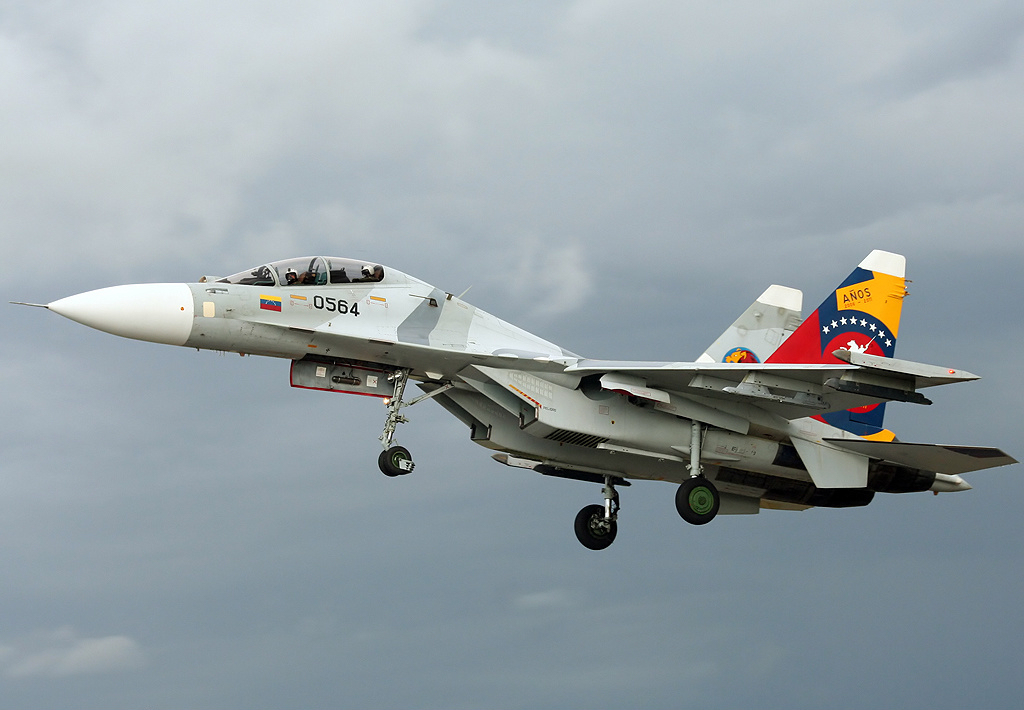
Foto de archivo: André Austin Du-Pont Rocha / Mexico Air Spotters, vía Wikimedia Commons. Barcelona, Venezuela, octubre de 2011. GFDL 1.2 únicamente. No corresponde a las operaciones de enero de 2026 ni al ataque en Apure. Fuente y permisos de la fotografía.
VITRINA POLÍTICA · FUERZA ARMADA
Para el general retirado Ovidio Poggioli, la operación del 3 de enero tomó por sorpresa a una Fuerza Armada sin inteligencia ni defensas operativas. Sobre el ataque de la semana pasada en Apure, criticó la «ambigüedad» de EE.UU. y del Gobierno, y recordó que la Constitución prohíbe las bases militares extranjeras.
Las 6W · INCÍSOS
| Qué | El análisis de un general retirado sobre la falta de capacidad militar venezolana, el ataque en Apure y la posibilidad de bases de EE.UU. |
|---|---|
| Quién | El general de brigada retirado Ovidio Poggioli, entrevistado por José Vicente Carrasquero. |
| Cuándo | Miércoles 11 de noviembre de 2026. |
| Dónde | En el programa Política sin Pasiones, en YouTube. |
| Por qué | Según Poggioli, ni el Gobierno ni el Ministerio de la Defensa han dado información oficial sobre el ataque en Apure, y la presencia militar de EE.UU. sigue sin reglas públicas. |
| Cómo | En una entrevista de unos 50 minutos con preguntas del público. |
«Si hubiese habido inteligencia, hubiesen detectado que venía una operación militar». El general de brigada retirado Ovidio Jesús Poggioli Pérez explicó así, en Política sin Pasiones, por qué la Fuerza Armada no reaccionó el 3 de enero, cuando una operación de EE.UU. capturó a Nicolás Maduro (ver el programa completo).
El 3 de enero
Para Poggioli fue «una operación de inteligencia muy precisa de los americanos», posiblemente con «colaboración interna del país»: «Prácticamente tenían ya ploteados todos los puntos críticos que tenían que neutralizar, y lo hicieron». Del lado venezolano, «la Fuerza Armada no tuvo inteligencia, ni los sistemas defensivos fueron eficientes, o ni siquiera tuvieron actividad». Recordó que en todo fracaso de ese tipo hay dos responsables que no son operativos: la inteligencia y la logística. «Al no tener inteligencia, no tienes ni vista ni oído».
Los indicios, explicó, estaban a la vista: el despliegue de unidades en el Atlántico y los ejercicios de simulación. «Deducir que algo iba a pasar era sencillo. El problema era el cuándo». Sobre el mensaje de madrugada del entonces ministro de la Defensa, Vladimir Padrino López, dijo que no sabe si fue en vivo o grabado, y añadió: «Muchos personeros del régimen piensan que el país ignora lo que está pasando», cuando «todo el mundo conoce que el mantenimiento es cero y la operatividad es tendiente a cero».
Apure y la ambigüedad
Sobre el ataque de la semana pasada en Apure, que según The New York Times contó con drones e inteligencia de EE.UU., Poggioli dijo que es «muy extraño» que no haya información oficial del Gobierno ni del Ministerio de la Defensa. Cree que hubo participación o colaboración de las fuerzas estadounidenses o de la CIA, y que la Fuerza Armada venezolana no tiene hoy capacidad para una operación así: «El poder relativo de combate de las Fuerzas Armadas en relación a las amenazas es muy pobre», por la falta de mantenimiento y de efectivos.
Para él, la estrategia de EE.UU. «se basa en la ambigüedad»: «Si una operación militar en Apure tuvo colaboración o apoyo de las Fuerzas Armadas americanas, que lo digan. No lo dicen porque aquí no se permiten las bases o las operaciones extranjeras, pero lo hacen. Entonces vamos a sincerar la situación».
Las bases que prohíbe la Constitución
Carrasquero le preguntó si conviene una base militar de EE.UU. en Venezuela, pese a que la Constitución la prohíbe. El artículo 13 establece que el territorio venezolano es «una zona de paz» y que en él no se podrán establecer bases militares extranjeras (Constitución). Poggioli respondió con una regla sencilla: «Mientras esta Constitución esté vigente, la Constitución prohíbe que existan bases militares en el territorio nacional. Si es una necesidad imperiosa, tienes que modificar la Constitución». Y criticó la práctica de invocarla solo cuando conviene: «Desde el 3 de enero parece que las reglas de juego las establece el tutor. Si al tutor le conviene algo, la Constitución no importa».
De Rusia a EE.UU.
Poggioli apoyó «100 %» retomar la cooperación con las Fuerzas Armadas de EE.UU.: cursos, formación y equipamiento. Recordó que en su época salían 60 o 70 oficiales a capacitarse en EE.UU. y en Europa, y que con el chavismo eso se redujo a Bielorrusia, Cuba y Rusia: «Se encapsuló a la Fuerza Armada para retrocederla 50 o 60 años».
Para él, la transición todavía no ha llegado a los cuarteles: «Todavía en los cuarteles, después del 3 de enero, dicen “Patria, socialismo o muerte”, “Chávez vive”. Hay como un doble juego. En el interno de la Fuerza Armada, para mí no hay tal transición. Sigue todo igual». Su propuesta para la institución está en esta nota.
La pregunta de Poggioli es la que Washington y Caracas siguen sin responder: ¿con qué reglas opera hoy EE.UU. en territorio venezolano? Un país que pretende volver a la Constitución no puede tolerar operaciones militares extranjeras que nadie reconoce, aunque persigan a grupos armados como el ELN. Si hace falta cooperación militar, que se discuta, se apruebe y se publique. La ambigüedad, como advierte, deja a los venezolanos sin saber «dónde están parados», y a la Fuerza Armada sin una misión clara.
¿Qué falta, exactamente, para que pase? Que el Gobierno y el Ministerio de la Defensa informen qué pasó en Apure y quién participó; que EE.UU. y Venezuela publiquen los términos de su cooperación militar; y que cualquier presencia militar extranjera se discuta en la Asamblea y respete el artículo 13 o se reforme la Constitución.
Para leer más en INCÍSOS
- Poggioli pide sacar a los militares de la administración pública: la propuesta de Poggioli.
- EE.UU. apoyó con drones e inteligencia el ataque al ELN en Apure: el ataque en Apure.
- Trump dice que EE.UU. está «totalmente al mando» en Venezuela: Trump «al mando».
Fuentes principales: Entrevista de José Vicente Carrasquero al general (r) Ovidio Poggioli en Política sin Pasiones, 11 de noviembre de 2026; Constitución de la República Bolivariana de Venezuela.
Licencia de la fotografía · GNU Free Documentation License 1.2
Copyright © 2011 André Austin Du-Pont Rocha / Mexico Air Spotters. Permission is granted to copy, distribute and/or modify this photograph under the terms of the GNU Free Documentation License, Version 1.2 only, with no Invariant Sections, no Front-Cover Texts, and no Back-Cover Texts.
Esta licencia se aplica exclusivamente a la fotografía. El texto periodístico es una obra independiente. Fotografía original íntegra.
GNU Free Documentation License

Version 1.2, November 2002

        Copyright (C) 2000,2001,2002 Free Software Foundation, Inc.
    51 Franklin St, Fifth Floor, Boston, MA 02110-1301 USA
    Everyone is permitted to copy and distribute verbatim copies
    of this license document, but changing it is not allowed.

0. PREAMBLE

The purpose of this License is to make a manual, textbook, or other functional and useful document "free" in the sense of freedom: to assure everyone the effective freedom to copy and redistribute it, with or without modifying it, either commercially or noncommercially. Secondarily, this License preserves for the author and publisher a way to get credit for their work, while not being considered responsible for modifications made by others.

This License is a kind of "copyleft", which means that derivative works of the document must themselves be free in the same sense. It complements the GNU General Public License, which is a copyleft license designed for free software.

We have designed this License in order to use it for manuals for free software, because free software needs free documentation: a free program should come with manuals providing the same freedoms that the software does. But this License is not limited to software manuals; it can be used for any textual work, regardless of subject matter or whether it is published as a printed book. We recommend this License principally for works whose purpose is instruction or reference.

1. APPLICABILITY AND DEFINITIONS

This License applies to any manual or other work, in any medium, that contains a notice placed by the copyright holder saying it can be distributed under the terms of this License. Such a notice grants a world-wide, royalty-free license, unlimited in duration, to use that work under the conditions stated herein. The "Document", below, refers to any such manual or work. Any member of the public is a licensee, and is addressed as "you". You accept the license if you copy, modify or distribute the work in a way requiring permission under copyright law.

A "Modified Version" of the Document means any work containing the Document or a portion of it, either copied verbatim, or with modifications and/or translated into another language.

A "Secondary Section" is a named appendix or a front-matter section of the Document that deals exclusively with the relationship of the publishers or authors of the Document to the Document's overall subject (or to related matters) and contains nothing that could fall directly within that overall subject. (Thus, if the Document is in part a textbook of mathematics, a Secondary Section may not explain any mathematics.) The relationship could be a matter of historical connection with the subject or with related matters, or of legal, commercial, philosophical, ethical or political position regarding them.

The "Invariant Sections" are certain Secondary Sections whose titles are designated, as being those of Invariant Sections, in the notice that says that the Document is released under this License. If a section does not fit the above definition of Secondary then it is not allowed to be designated as Invariant. The Document may contain zero Invariant Sections. If the Document does not identify any Invariant Sections then there are none.

The "Cover Texts" are certain short passages of text that are listed, as Front-Cover Texts or Back-Cover Texts, in the notice that says that the Document is released under this License. A Front-Cover Text may be at most 5 words, and a Back-Cover Text may be at most 25 words.

A "Transparent" copy of the Document means a machine-readable copy, represented in a format whose specification is available to the general public, that is suitable for revising the document straightforwardly with generic text editors or (for images composed of pixels) generic paint programs or (for drawings) some widely available drawing editor, and that is suitable for input to text formatters or for automatic translation to a variety of formats suitable for input to text formatters. A copy made in an otherwise Transparent file format whose markup, or absence of markup, has been arranged to thwart or discourage subsequent modification by readers is not Transparent. An image format is not Transparent if used for any substantial amount of text. A copy that is not "Transparent" is called "Opaque".

Examples of suitable formats for Transparent copies include plain ASCII without markup, Texinfo input format, LaTeX input format, SGML or XML using a publicly available DTD, and standard-conforming simple HTML, PostScript or PDF designed for human modification. Examples of transparent image formats include PNG, XCF and JPG. Opaque formats include proprietary formats that can be read and edited only by proprietary word processors, SGML or XML for which the DTD and/or processing tools are not generally available, and the machine-generated HTML, PostScript or PDF produced by some word processors for output purposes only.

The "Title Page" means, for a printed book, the title page itself, plus such following pages as are needed to hold, legibly, the material this License requires to appear in the title page. For works in formats which do not have any title page as such, "Title Page" means the text near the most prominent appearance of the work's title, preceding the beginning of the body of the text.

A section "Entitled XYZ" means a named subunit of the Document whose title either is precisely XYZ or contains XYZ in parentheses following text that translates XYZ in another language. (Here XYZ stands for a specific section name mentioned below, such as "Acknowledgements", "Dedications", "Endorsements", or "History".) To "Preserve the Title" of such a section when you modify the Document means that it remains a section "Entitled XYZ" according to this definition.

The Document may include Warranty Disclaimers next to the notice which states that this License applies to the Document. These Warranty Disclaimers are considered to be included by reference in this License, but only as regards disclaiming warranties: any other implication that these Warranty Disclaimers may have is void and has no effect on the meaning of this License.

2. VERBATIM COPYING

You may copy and distribute the Document in any medium, either commercially or noncommercially, provided that this License, the copyright notices, and the license notice saying this License applies to the Document are reproduced in all copies, and that you add no other conditions whatsoever to those of this License. You may not use technical measures to obstruct or control the reading or further copying of the copies you make or distribute. However, you may accept compensation in exchange for copies. If you distribute a large enough number of copies you must also follow the conditions in section 3.

You may also lend copies, under the same conditions stated above, and you may publicly display copies.

3. COPYING IN QUANTITY

If you publish printed copies (or copies in media that commonly have printed covers) of the Document, numbering more than 100, and the Document's license notice requires Cover Texts, you must enclose the copies in covers that carry, clearly and legibly, all these Cover Texts: Front-Cover Texts on the front cover, and Back-Cover Texts on the back cover. Both covers must also clearly and legibly identify you as the publisher of these copies. The front cover must present the full title with all words of the title equally prominent and visible. You may add other material on the covers in addition. Copying with changes limited to the covers, as long as they preserve the title of the Document and satisfy these conditions, can be treated as verbatim copying in other respects.

If the required texts for either cover are too voluminous to fit legibly, you should put the first ones listed (as many as fit reasonably) on the actual cover, and continue the rest onto adjacent pages.

If you publish or distribute Opaque copies of the Document numbering more than 100, you must either include a machine-readable Transparent copy along with each Opaque copy, or state in or with each Opaque copy a computer-network location from which the general network-using public has access to download using public-standard network protocols a complete Transparent copy of the Document, free of added material. If you use the latter option, you must take reasonably prudent steps, when you begin distribution of Opaque copies in quantity, to ensure that this Transparent copy will remain thus accessible at the stated location until at least one year after the last time you distribute an Opaque copy (directly or through your agents or retailers) of that edition to the public.

It is requested, but not required, that you contact the authors of the Document well before redistributing any large number of copies, to give them a chance to provide you with an updated version of the Document.

4. MODIFICATIONS

You may copy and distribute a Modified Version of the Document under the conditions of sections 2 and 3 above, provided that you release the Modified Version under precisely this License, with the Modified Version filling the role of the Document, thus licensing distribution and modification of the Modified Version to whoever possesses a copy of it. In addition, you must do these things in the Modified Version:

* A. Use in the Title Page (and on the covers, if any) a title distinct from that of the Document, and from those of previous versions (which should, if there were any, be listed in the History section of the Document). You may use the same title as a previous version if the original publisher of that version gives permission.
* B. List on the Title Page, as authors, one or more persons or entities responsible for authorship of the modifications in the Modified Version, together with at least five of the principal authors of the Document (all of its principal authors, if it has fewer than five), unless they release you from this requirement.
* C. State on the Title page the name of the publisher of the Modified Version, as the publisher.
* D. Preserve all the copyright notices of the Document.
* E. Add an appropriate copyright notice for your modifications adjacent to the other copyright notices.
* F. Include, immediately after the copyright notices, a license notice giving the public permission to use the Modified Version under the terms of this License, in the form shown in the Addendum below.
* G. Preserve in that license notice the full lists of Invariant Sections and required Cover Texts given in the Document's license notice.
* H. Include an unaltered copy of this License.
* I. Preserve the section Entitled "History", Preserve its Title, and add to it an item stating at least the title, year, new authors, and publisher of the Modified Version as given on the Title Page. If there is no section Entitled "History" in the Document, create one stating the title, year, authors, and publisher of the Document as given on its Title Page, then add an item describing the Modified Version as stated in the previous sentence.
* J. Preserve the network location, if any, given in the Document for public access to a Transparent copy of the Document, and likewise the network locations given in the Document for previous versions it was based on. These may be placed in the "History" section. You may omit a network location for a work that was published at least four years before the Document itself, or if the original publisher of the version it refers to gives permission.
* K. For any section Entitled "Acknowledgements" or "Dedications", Preserve the Title of the section, and preserve in the section all the substance and tone of each of the contributor acknowledgements and/or dedications given therein.
* L. Preserve all the Invariant Sections of the Document, unaltered in their text and in their titles. Section numbers or the equivalent are not considered part of the section titles.
* M. Delete any section Entitled "Endorsements". Such a section may not be included in the Modified Version.
* N. Do not retitle any existing section to be Entitled "Endorsements" or to conflict in title with any Invariant Section.
* O. Preserve any Warranty Disclaimers.

If the Modified Version includes new front-matter sections or appendices that qualify as Secondary Sections and contain no material copied from the Document, you may at your option designate some or all of these sections as invariant. To do this, add their titles to the list of Invariant Sections in the Modified Version's license notice. These titles must be distinct from any other section titles.

You may add a section Entitled "Endorsements", provided it contains nothing but endorsements of your Modified Version by various parties--for example, statements of peer review or that the text has been approved by an organization as the authoritative definition of a standard.

You may add a passage of up to five words as a Front-Cover Text, and a passage of up to 25 words as a Back-Cover Text, to the end of the list of Cover Texts in the Modified Version. Only one passage of Front-Cover Text and one of Back-Cover Text may be added by (or through arrangements made by) any one entity. If the Document already includes a cover text for the same cover, previously added by you or by arrangement made by the same entity you are acting on behalf of, you may not add another; but you may replace the old one, on explicit permission from the previous publisher that added the old one.

The author(s) and publisher(s) of the Document do not by this License give permission to use their names for publicity for or to assert or imply endorsement of any Modified Version.

5. COMBINING DOCUMENTS

You may combine the Document with other documents released under this License, under the terms defined in section 4 above for modified versions, provided that you include in the combination all of the Invariant Sections of all of the original documents, unmodified, and list them all as Invariant Sections of your combined work in its license notice, and that you preserve all their Warranty Disclaimers.

The combined work need only contain one copy of this License, and multiple identical Invariant Sections may be replaced with a single copy. If there are multiple Invariant Sections with the same name but different contents, make the title of each such section unique by adding at the end of it, in parentheses, the name of the original author or publisher of that section if known, or else a unique number. Make the same adjustment to the section titles in the list of Invariant Sections in the license notice of the combined work.

In the combination, you must combine any sections Entitled "History" in the various original documents, forming one section Entitled "History"; likewise combine any sections Entitled "Acknowledgements", and any sections Entitled "Dedications". You must delete all sections Entitled "Endorsements".

6. COLLECTIONS OF DOCUMENTS

You may make a collection consisting of the Document and other documents released under this License, and replace the individual copies of this License in the various documents with a single copy that is included in the collection, provided that you follow the rules of this License for verbatim copying of each of the documents in all other respects.

You may extract a single document from such a collection, and distribute it individually under this License, provided you insert a copy of this License into the extracted document, and follow this License in all other respects regarding verbatim copying of that document.

7. AGGREGATION WITH INDEPENDENT WORKS

A compilation of the Document or its derivatives with other separate and independent documents or works, in or on a volume of a storage or distribution medium, is called an "aggregate" if the copyright resulting from the compilation is not used to limit the legal rights of the compilation's users beyond what the individual works permit. When the Document is included in an aggregate, this License does not apply to the other works in the aggregate which are not themselves derivative works of the Document.

If the Cover Text requirement of section 3 is applicable to these copies of the Document, then if the Document is less than one half of the entire aggregate, the Document's Cover Texts may be placed on covers that bracket the Document within the aggregate, or the electronic equivalent of covers if the Document is in electronic form. Otherwise they must appear on printed covers that bracket the whole aggregate.

8. TRANSLATION

Translation is considered a kind of modification, so you may distribute translations of the Document under the terms of section 4. Replacing Invariant Sections with translations requires special permission from their copyright holders, but you may include translations of some or all Invariant Sections in addition to the original versions of these Invariant Sections. You may include a translation of this License, and all the license notices in the Document, and any Warranty Disclaimers, provided that you also include the original English version of this License and the original versions of those notices and disclaimers. In case of a disagreement between the translation and the original version of this License or a notice or disclaimer, the original version will prevail.

If a section in the Document is Entitled "Acknowledgements", "Dedications", or "History", the requirement (section 4) to Preserve its Title (section 1) will typically require changing the actual title.

9. TERMINATION

You may not copy, modify, sublicense, or distribute the Document except as expressly provided for under this License. Any other attempt to copy, modify, sublicense or distribute the Document is void, and will automatically terminate your rights under this License. However, parties who have received copies, or rights, from you under this License will not have their licenses terminated so long as such parties remain in full compliance.

10. FUTURE REVISIONS OF THIS LICENSE

The Free Software Foundation may publish new, revised versions of the GNU Free Documentation License from time to time. Such new versions will be similar in spirit to the present version, but may differ in detail to address new problems or concerns. See <http://www.gnu.org/copyleft/> .

Each version of the License is given a distinguishing version number. If the Document specifies that a particular numbered version of this License "or any later version" applies to it, you have the option of following the terms and conditions either of that specified version or of any later version that has been published (not as a draft) by the Free Software Foundation. If the Document does not specify a version number of this License, you may choose any version ever published (not as a draft) by the Free Software Foundation.

ADDENDUM: How to use this License for your documents

To use this License in a document you have written, include a copy of the License in the document and put the following copyright and license notices just after the title page:

        Copyright (c) YEAR YOUR NAME.
    Permission is granted to copy, distribute and/or modify this document
    under the terms of the GNU Free Documentation License, Version 1.2
    or any later version published by the Free Software Foundation;
    with no Invariant Sections, no Front-Cover Texts, and no Back-Cover Texts.
    A copy of the license is included in the section entitled
    "GNU Free Documentation License".

If you have Invariant Sections, Front-Cover Texts and Back-Cover Texts, replace the "with...Texts." line with this:

        with the Invariant Sections being LIST THEIR TITLES, with the
    Front-Cover Texts being LIST, and with the Back-Cover Texts being LIST.

If you have Invariant Sections without Cover Texts, or some other combination of the three, merge those two alternatives to suit the situation.

If your document contains nontrivial examples of program code, we recommend releasing these examples in parallel under your choice of free software license, such as the GNU General Public License, to permit their use in free software.
Foto de archivo: André Austin Du-Pont Rocha / Mexico Air Spotters, vía Wikimedia Commons. Barcelona, Venezuela, octubre de 2011. GFDL 1.2 únicamente. No corresponde a las operaciones de enero de 2026 ni al ataque en Apure. Fuente y permisos de la fotografía.
VITRINA POLÍTICA · FUERZA ARMADA
El general retirado Ovidio Poggioli propone una transición militar en dos etapas: primero, subordinar la Fuerza Armada a la Constitución y al poder civil y devolver a los militares a los cuarteles; después, reconstruirla durante unos 30 años. «Hoy hay un control militar sobre el mundo civil», dijo en Política sin Pasiones.
Las 6W · INCÍSOS
| Qué | Una propuesta para reinstitucionalizar y reconstruir la Fuerza Armada en la transición venezolana. |
|---|---|
| Quién | El general de brigada retirado Ovidio Poggioli, entrevistado por el politólogo José Vicente Carrasquero. |
| Cuándo | Miércoles 11 de noviembre de 2026, Día de los Veteranos en EE.UU. |
| Dónde | En el programa Política sin Pasiones, en YouTube. |
| Por qué | Según Poggioli, tras 27 años de politización, la Fuerza Armada perdió profesionalismo y confianza ciudadana, y su papel en la transición sigue sin definirse. |
| Cómo | Con una etapa corta de reinstitucionalización y una larga de reconstrucción, desde las escuelas militares. |
«Hoy hay un control militar sobre el mundo civil». El general de brigada retirado Ovidio Jesús Poggioli Pérez resumió así, el miércoles 11 de noviembre, el estado de la Fuerza Armada Nacional Bolivariana después de 27 años de chavismo. Lo dijo en Política sin Pasiones, el programa del politólogo José Vicente Carrasquero (ver el programa completo). Carrasquero aclaró al inicio que el objetivo no era juzgar el papel de los militares en los últimos años, sino discutir el que deben tener en la Venezuela que viene.
Dos etapas
Poggioli, que habló «a título personal», propone separar el proceso en dos. La primera, de transición y a corto plazo, tiene tres objetivos: reinstitucionalizar, profesionalizar y lograr «la conciencia plena de que la Fuerza Armada está subordinada a la Constitución y al poder civil». La segunda es una reconstrucción que empieza en las escuelas militares, con la selección de los cadetes, la formación y los perfiles de carrera. «Eso va, por lo menos, 30 años», dijo. «Pero si no comenzamos, cada vez se va a dejar más».
Advirtió que reinstitucionalizar no es una palabra punitiva: «No se va a reinstitucionalizar a la Fuerza Armada. Se tienen que reinstitucionalizar todos los organismos del Estado, porque lo que pasa en la Fuerza Armada no pasa exclusivamente en la Fuerza Armada». Significa, explicó, «volver a encauzar» una profesión dedicada a la defensa.
Lo que rompió la Constitución de 1999
Poggioli señaló varias decisiones que, a su juicio, minaron la institucionalidad. El voto militar no es el problema, dijo, si la Fuerza Armada es profesional; pero «cuando tú desprofesionalizas esa institución, tú la controlas a través del voto». Criticó que los ascensos dependan solo de la propia Fuerza Armada, sin control del Poder Legislativo; las consignas como «Chávez vive» y «Patria, socialismo o muerte», que todavía se gritan en los cuarteles, y el fin de la meritocracia: «Aquellos oficiales que gritaban más duro eran los más capacitados, y aquellos que estaban en un cuartel trabajando no los consideraban».
También planteó su interpretación constitucional: la Fuerza Armada no debe presentarse como defensora de la Constitución, porque esa es una obligación de todos los ciudadanos. Su misión, según el artículo 328, es garantizar la independencia y la soberanía de la Nación y la integridad del territorio (Constitución). Si se le asigna la defensa de la Constitución, explicó, «vas a colocar a la Fuerza Armada como un fiel de la balanza, y eso es una participación política».
Volver a los cuarteles
La propuesta más concreta es sacar a los militares de la administración pública. «Las Fuerzas Armadas deben volver a los cuarteles y no deberían, a excepción de casos particulares, tener una participación activa dentro de la administración pública, porque no están preparadas para eso». Reconoció el riesgo: «Si tú retiras todos los militares que están en la administración pública, generas un caos», porque ocupan muchos viceministerios y cargos. Por eso propone abrir los cargos administrativos del Ministerio de la Defensa, como planificación y presupuesto, a civiles de carrera: «Eso sí es unión cívico-militar».
Contra la corrupción, pidió que la Fuerza Armada quede sujeta al control del Poder Legislativo y que no haya fiscalía, contraloría ni justicia militar separadas del Ministerio Público y de la Contraloría General. «Cuando tú tienes una fiscalía militar que depende del ministro de la Defensa, ¿qué le van a decir esos fiscales?».
Una Fuerza Armada más pequeña
Poggioli estimó que hoy el número de efectivos está entre 60 % y 70 % por debajo de lo que establecen las tablas de organización, por las bajas y porque no se cumplen las cuotas del servicio militar. Propone una Fuerza Armada más pequeña, muy bien equipada y entrenada para operar en equipos multidisciplinarios, «como lo vimos el 3 de enero». Describió también el deterioro de la seguridad social: cuando era teniente coronel, su sueldo le alcanzaba para pagar la universidad de sus dos hijas y un carro; «hoy en día mandan a la tropa a comer fuera porque no hay comida en los cuarteles».
Sobre la idea de eliminar la Fuerza Armada fue tajante: «Ni pensar en eliminarlas. Lo que debemos es tener una Fuerza Armada acorde con los tiempos modernos y bien profesionales, que sea nuevamente un orgullo del país». Y admitió una responsabilidad generacional: «Mi generación está en deuda con la Fuerza Armada. Porque Chávez llegó, y la responsabilidad es de nosotros, de los que éramos oficiales activos».
Quién es Poggioli
Poggioli contó que, siendo general, Hugo Chávez le pidió pasarse a la revolución y que le respondió: «Mi única obligación es la lealtad a la Constitución». Según su relato, fue imputado tres veces y estuvo preso dos. En una sentencia del 29 de abril de 2024, notificada el 3 de octubre, la Corte Interamericana de Derechos Humanos declaró responsable al Estado venezolano por su detención arbitraria de 2003, por haberlo juzgado en la jurisdicción militar cuando ya no estaba en servicio activo y por violar su honor y sus garantías judiciales. Ordenó anular los procesos militares e indemnizarlo (Corte IDH). Poggioli dijo que el Estado no ha cumplido la reparación.
La transición venezolana tiene calendario para el TSJ y una promesa de elecciones, pero nadie ha dicho qué pasará con la Fuerza Armada. Es un vacío peligroso: ninguna elección será sostenible si los militares siguen gobernando ministerios, gritando consignas partidistas y administrando su propia justicia. La propuesta de Poggioli tiene dos virtudes: no es revanchista y distingue lo urgente, sacar la política de los cuarteles, de lo largo, formar otra generación. Su mayor desafío es el que él mismo admite: retirar a los militares de la administración pública sin dejar al Estado sin personal.
¿Qué falta, exactamente, para que pase? Que la Mesa de Caracas incluya la reforma militar en su agenda; que la Asamblea recupere el control sobre los ascensos y el presupuesto de la Defensa; que se prohíban las consignas partidistas en los cuarteles; y que haya un plan con plazos para sustituir a los militares en la administración pública.
Para leer más en INCÍSOS
- La Fuerza Armada no tuvo inteligencia el 3 de enero, dice Poggioli: el 3 de enero y Apure.
- EE.UU. apoyó con drones e inteligencia el ataque al ELN en Apure: el ataque en Apure.
- Los sargentos de Cotiza, en huelga de hambre tras cumplir su condena: los sargentos de Cotiza.
- Rubio pone fecha al nuevo TSJ, mediados de diciembre: la ruta de Rubio.
Fuentes principales: Entrevista de José Vicente Carrasquero al general (r) Ovidio Poggioli en Política sin Pasiones, 11 de noviembre de 2026; Corte Interamericana de Derechos Humanos, comunicado 68/2024; Constitución de la República Bolivariana de Venezuela.
Licencia de la fotografía · GNU Free Documentation License 1.2
Copyright © 2011 André Austin Du-Pont Rocha / Mexico Air Spotters. Permission is granted to copy, distribute and/or modify this photograph under the terms of the GNU Free Documentation License, Version 1.2 only, with no Invariant Sections, no Front-Cover Texts, and no Back-Cover Texts.
Esta licencia se aplica exclusivamente a la fotografía. El texto periodístico es una obra independiente. Fotografía original íntegra.
GNU Free Documentation License

Version 1.2, November 2002

        Copyright (C) 2000,2001,2002 Free Software Foundation, Inc.
    51 Franklin St, Fifth Floor, Boston, MA 02110-1301 USA
    Everyone is permitted to copy and distribute verbatim copies
    of this license document, but changing it is not allowed.

0. PREAMBLE

The purpose of this License is to make a manual, textbook, or other functional and useful document "free" in the sense of freedom: to assure everyone the effective freedom to copy and redistribute it, with or without modifying it, either commercially or noncommercially. Secondarily, this License preserves for the author and publisher a way to get credit for their work, while not being considered responsible for modifications made by others.

This License is a kind of "copyleft", which means that derivative works of the document must themselves be free in the same sense. It complements the GNU General Public License, which is a copyleft license designed for free software.

We have designed this License in order to use it for manuals for free software, because free software needs free documentation: a free program should come with manuals providing the same freedoms that the software does. But this License is not limited to software manuals; it can be used for any textual work, regardless of subject matter or whether it is published as a printed book. We recommend this License principally for works whose purpose is instruction or reference.

1. APPLICABILITY AND DEFINITIONS

This License applies to any manual or other work, in any medium, that contains a notice placed by the copyright holder saying it can be distributed under the terms of this License. Such a notice grants a world-wide, royalty-free license, unlimited in duration, to use that work under the conditions stated herein. The "Document", below, refers to any such manual or work. Any member of the public is a licensee, and is addressed as "you". You accept the license if you copy, modify or distribute the work in a way requiring permission under copyright law.

A "Modified Version" of the Document means any work containing the Document or a portion of it, either copied verbatim, or with modifications and/or translated into another language.

A "Secondary Section" is a named appendix or a front-matter section of the Document that deals exclusively with the relationship of the publishers or authors of the Document to the Document's overall subject (or to related matters) and contains nothing that could fall directly within that overall subject. (Thus, if the Document is in part a textbook of mathematics, a Secondary Section may not explain any mathematics.) The relationship could be a matter of historical connection with the subject or with related matters, or of legal, commercial, philosophical, ethical or political position regarding them.

The "Invariant Sections" are certain Secondary Sections whose titles are designated, as being those of Invariant Sections, in the notice that says that the Document is released under this License. If a section does not fit the above definition of Secondary then it is not allowed to be designated as Invariant. The Document may contain zero Invariant Sections. If the Document does not identify any Invariant Sections then there are none.

The "Cover Texts" are certain short passages of text that are listed, as Front-Cover Texts or Back-Cover Texts, in the notice that says that the Document is released under this License. A Front-Cover Text may be at most 5 words, and a Back-Cover Text may be at most 25 words.

A "Transparent" copy of the Document means a machine-readable copy, represented in a format whose specification is available to the general public, that is suitable for revising the document straightforwardly with generic text editors or (for images composed of pixels) generic paint programs or (for drawings) some widely available drawing editor, and that is suitable for input to text formatters or for automatic translation to a variety of formats suitable for input to text formatters. A copy made in an otherwise Transparent file format whose markup, or absence of markup, has been arranged to thwart or discourage subsequent modification by readers is not Transparent. An image format is not Transparent if used for any substantial amount of text. A copy that is not "Transparent" is called "Opaque".

Examples of suitable formats for Transparent copies include plain ASCII without markup, Texinfo input format, LaTeX input format, SGML or XML using a publicly available DTD, and standard-conforming simple HTML, PostScript or PDF designed for human modification. Examples of transparent image formats include PNG, XCF and JPG. Opaque formats include proprietary formats that can be read and edited only by proprietary word processors, SGML or XML for which the DTD and/or processing tools are not generally available, and the machine-generated HTML, PostScript or PDF produced by some word processors for output purposes only.

The "Title Page" means, for a printed book, the title page itself, plus such following pages as are needed to hold, legibly, the material this License requires to appear in the title page. For works in formats which do not have any title page as such, "Title Page" means the text near the most prominent appearance of the work's title, preceding the beginning of the body of the text.

A section "Entitled XYZ" means a named subunit of the Document whose title either is precisely XYZ or contains XYZ in parentheses following text that translates XYZ in another language. (Here XYZ stands for a specific section name mentioned below, such as "Acknowledgements", "Dedications", "Endorsements", or "History".) To "Preserve the Title" of such a section when you modify the Document means that it remains a section "Entitled XYZ" according to this definition.

The Document may include Warranty Disclaimers next to the notice which states that this License applies to the Document. These Warranty Disclaimers are considered to be included by reference in this License, but only as regards disclaiming warranties: any other implication that these Warranty Disclaimers may have is void and has no effect on the meaning of this License.

2. VERBATIM COPYING

You may copy and distribute the Document in any medium, either commercially or noncommercially, provided that this License, the copyright notices, and the license notice saying this License applies to the Document are reproduced in all copies, and that you add no other conditions whatsoever to those of this License. You may not use technical measures to obstruct or control the reading or further copying of the copies you make or distribute. However, you may accept compensation in exchange for copies. If you distribute a large enough number of copies you must also follow the conditions in section 3.

You may also lend copies, under the same conditions stated above, and you may publicly display copies.

3. COPYING IN QUANTITY

If you publish printed copies (or copies in media that commonly have printed covers) of the Document, numbering more than 100, and the Document's license notice requires Cover Texts, you must enclose the copies in covers that carry, clearly and legibly, all these Cover Texts: Front-Cover Texts on the front cover, and Back-Cover Texts on the back cover. Both covers must also clearly and legibly identify you as the publisher of these copies. The front cover must present the full title with all words of the title equally prominent and visible. You may add other material on the covers in addition. Copying with changes limited to the covers, as long as they preserve the title of the Document and satisfy these conditions, can be treated as verbatim copying in other respects.

If the required texts for either cover are too voluminous to fit legibly, you should put the first ones listed (as many as fit reasonably) on the actual cover, and continue the rest onto adjacent pages.

If you publish or distribute Opaque copies of the Document numbering more than 100, you must either include a machine-readable Transparent copy along with each Opaque copy, or state in or with each Opaque copy a computer-network location from which the general network-using public has access to download using public-standard network protocols a complete Transparent copy of the Document, free of added material. If you use the latter option, you must take reasonably prudent steps, when you begin distribution of Opaque copies in quantity, to ensure that this Transparent copy will remain thus accessible at the stated location until at least one year after the last time you distribute an Opaque copy (directly or through your agents or retailers) of that edition to the public.

It is requested, but not required, that you contact the authors of the Document well before redistributing any large number of copies, to give them a chance to provide you with an updated version of the Document.

4. MODIFICATIONS

You may copy and distribute a Modified Version of the Document under the conditions of sections 2 and 3 above, provided that you release the Modified Version under precisely this License, with the Modified Version filling the role of the Document, thus licensing distribution and modification of the Modified Version to whoever possesses a copy of it. In addition, you must do these things in the Modified Version:

* A. Use in the Title Page (and on the covers, if any) a title distinct from that of the Document, and from those of previous versions (which should, if there were any, be listed in the History section of the Document). You may use the same title as a previous version if the original publisher of that version gives permission.
* B. List on the Title Page, as authors, one or more persons or entities responsible for authorship of the modifications in the Modified Version, together with at least five of the principal authors of the Document (all of its principal authors, if it has fewer than five), unless they release you from this requirement.
* C. State on the Title page the name of the publisher of the Modified Version, as the publisher.
* D. Preserve all the copyright notices of the Document.
* E. Add an appropriate copyright notice for your modifications adjacent to the other copyright notices.
* F. Include, immediately after the copyright notices, a license notice giving the public permission to use the Modified Version under the terms of this License, in the form shown in the Addendum below.
* G. Preserve in that license notice the full lists of Invariant Sections and required Cover Texts given in the Document's license notice.
* H. Include an unaltered copy of this License.
* I. Preserve the section Entitled "History", Preserve its Title, and add to it an item stating at least the title, year, new authors, and publisher of the Modified Version as given on the Title Page. If there is no section Entitled "History" in the Document, create one stating the title, year, authors, and publisher of the Document as given on its Title Page, then add an item describing the Modified Version as stated in the previous sentence.
* J. Preserve the network location, if any, given in the Document for public access to a Transparent copy of the Document, and likewise the network locations given in the Document for previous versions it was based on. These may be placed in the "History" section. You may omit a network location for a work that was published at least four years before the Document itself, or if the original publisher of the version it refers to gives permission.
* K. For any section Entitled "Acknowledgements" or "Dedications", Preserve the Title of the section, and preserve in the section all the substance and tone of each of the contributor acknowledgements and/or dedications given therein.
* L. Preserve all the Invariant Sections of the Document, unaltered in their text and in their titles. Section numbers or the equivalent are not considered part of the section titles.
* M. Delete any section Entitled "Endorsements". Such a section may not be included in the Modified Version.
* N. Do not retitle any existing section to be Entitled "Endorsements" or to conflict in title with any Invariant Section.
* O. Preserve any Warranty Disclaimers.

If the Modified Version includes new front-matter sections or appendices that qualify as Secondary Sections and contain no material copied from the Document, you may at your option designate some or all of these sections as invariant. To do this, add their titles to the list of Invariant Sections in the Modified Version's license notice. These titles must be distinct from any other section titles.

You may add a section Entitled "Endorsements", provided it contains nothing but endorsements of your Modified Version by various parties--for example, statements of peer review or that the text has been approved by an organization as the authoritative definition of a standard.

You may add a passage of up to five words as a Front-Cover Text, and a passage of up to 25 words as a Back-Cover Text, to the end of the list of Cover Texts in the Modified Version. Only one passage of Front-Cover Text and one of Back-Cover Text may be added by (or through arrangements made by) any one entity. If the Document already includes a cover text for the same cover, previously added by you or by arrangement made by the same entity you are acting on behalf of, you may not add another; but you may replace the old one, on explicit permission from the previous publisher that added the old one.

The author(s) and publisher(s) of the Document do not by this License give permission to use their names for publicity for or to assert or imply endorsement of any Modified Version.

5. COMBINING DOCUMENTS

You may combine the Document with other documents released under this License, under the terms defined in section 4 above for modified versions, provided that you include in the combination all of the Invariant Sections of all of the original documents, unmodified, and list them all as Invariant Sections of your combined work in its license notice, and that you preserve all their Warranty Disclaimers.

The combined work need only contain one copy of this License, and multiple identical Invariant Sections may be replaced with a single copy. If there are multiple Invariant Sections with the same name but different contents, make the title of each such section unique by adding at the end of it, in parentheses, the name of the original author or publisher of that section if known, or else a unique number. Make the same adjustment to the section titles in the list of Invariant Sections in the license notice of the combined work.

In the combination, you must combine any sections Entitled "History" in the various original documents, forming one section Entitled "History"; likewise combine any sections Entitled "Acknowledgements", and any sections Entitled "Dedications". You must delete all sections Entitled "Endorsements".

6. COLLECTIONS OF DOCUMENTS

You may make a collection consisting of the Document and other documents released under this License, and replace the individual copies of this License in the various documents with a single copy that is included in the collection, provided that you follow the rules of this License for verbatim copying of each of the documents in all other respects.

You may extract a single document from such a collection, and distribute it individually under this License, provided you insert a copy of this License into the extracted document, and follow this License in all other respects regarding verbatim copying of that document.

7. AGGREGATION WITH INDEPENDENT WORKS

A compilation of the Document or its derivatives with other separate and independent documents or works, in or on a volume of a storage or distribution medium, is called an "aggregate" if the copyright resulting from the compilation is not used to limit the legal rights of the compilation's users beyond what the individual works permit. When the Document is included in an aggregate, this License does not apply to the other works in the aggregate which are not themselves derivative works of the Document.

If the Cover Text requirement of section 3 is applicable to these copies of the Document, then if the Document is less than one half of the entire aggregate, the Document's Cover Texts may be placed on covers that bracket the Document within the aggregate, or the electronic equivalent of covers if the Document is in electronic form. Otherwise they must appear on printed covers that bracket the whole aggregate.

8. TRANSLATION

Translation is considered a kind of modification, so you may distribute translations of the Document under the terms of section 4. Replacing Invariant Sections with translations requires special permission from their copyright holders, but you may include translations of some or all Invariant Sections in addition to the original versions of these Invariant Sections. You may include a translation of this License, and all the license notices in the Document, and any Warranty Disclaimers, provided that you also include the original English version of this License and the original versions of those notices and disclaimers. In case of a disagreement between the translation and the original version of this License or a notice or disclaimer, the original version will prevail.

If a section in the Document is Entitled "Acknowledgements", "Dedications", or "History", the requirement (section 4) to Preserve its Title (section 1) will typically require changing the actual title.

9. TERMINATION

You may not copy, modify, sublicense, or distribute the Document except as expressly provided for under this License. Any other attempt to copy, modify, sublicense or distribute the Document is void, and will automatically terminate your rights under this License. However, parties who have received copies, or rights, from you under this License will not have their licenses terminated so long as such parties remain in full compliance.

10. FUTURE REVISIONS OF THIS LICENSE

The Free Software Foundation may publish new, revised versions of the GNU Free Documentation License from time to time. Such new versions will be similar in spirit to the present version, but may differ in detail to address new problems or concerns. See <http://www.gnu.org/copyleft/> .

Each version of the License is given a distinguishing version number. If the Document specifies that a particular numbered version of this License "or any later version" applies to it, you have the option of following the terms and conditions either of that specified version or of any later version that has been published (not as a draft) by the Free Software Foundation. If the Document does not specify a version number of this License, you may choose any version ever published (not as a draft) by the Free Software Foundation.

ADDENDUM: How to use this License for your documents

To use this License in a document you have written, include a copy of the License in the document and put the following copyright and license notices just after the title page:

        Copyright (c) YEAR YOUR NAME.
    Permission is granted to copy, distribute and/or modify this document
    under the terms of the GNU Free Documentation License, Version 1.2
    or any later version published by the Free Software Foundation;
    with no Invariant Sections, no Front-Cover Texts, and no Back-Cover Texts.
    A copy of the license is included in the section entitled
    "GNU Free Documentation License".

If you have Invariant Sections, Front-Cover Texts and Back-Cover Texts, replace the "with...Texts." line with this:

        with the Invariant Sections being LIST THEIR TITLES, with the
    Front-Cover Texts being LIST, and with the Back-Cover Texts being LIST.

If you have Invariant Sections without Cover Texts, or some other combination of the three, merge those two alternatives to suit the situation.

If your document contains nontrivial examples of program code, we recommend releasing these examples in parallel under your choice of free software license, such as the GNU General Public License, to permit their use in free software.
-

 Entrevistas5 meses ago
Zair Mundaray: «Enfrenté al poder con ciencia»
-

 Política4 meses ago
Delcy Rodríguez enfrenta a la prensa internacional: la rueda de prensa que no cerró la brecha
-

 Política4 meses ago
El semáforo de las estructuras: qué significa cada color tras el terremoto
-

 Política6 meses ago
El economista, los bonos y Citgo
-

 Política6 meses ago
Roberto Smith Perera: «La reconstrucción no puede esperar a la elección»
-

 Especiales5 meses ago
Media vuelta… mar.
-

 Inciso3 meses ago
Márquez sabe qué pasó el 28 de julio
-

 Inciso6 meses ago
La paciencia de Washington